Elastic’s innovative investments to support an open ecosystem and a simpler developer experience In this blog, we want to share the investments that Elastic® is making to simplify your experience as you build AI applications. We know that developers have to stay nimble in today’s fast-evolving AI environment. Yet, common challenges make building generative AI applications needlessly rigid and complicated. To name just a few.
Recently, we launched a new Sandbox focused on handling syslog at scale with Cribl. The marketing messaging behind the Sandbox has been done a couple times already; therefore I wanted to let y’all see what we as Cribl Technical Marketing Engineers(TMEs) actually do in our daily lives. I’ll try to keep it engaging, with tales of danger and subterfuge, but I can only take so much artistic license. What’s in a Sandbox and how the Sandbox platform functions (i.e.
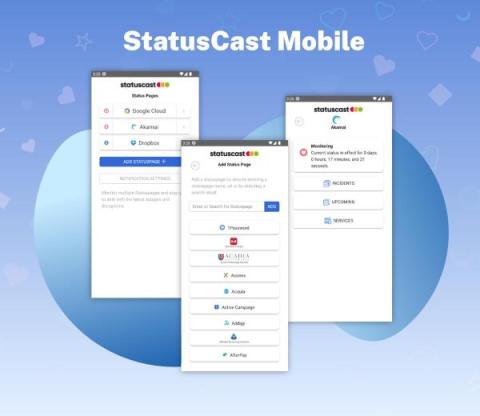
We are thrilled to introduce the latest innovation from StatusCast: our groundbreaking mobile status page application, which will be available on both Android and iOS platforms. This launch marks a significant milestone in the evolution of status page accessibility, offering unparalleled convenience and functionality to your power users, the subscribers.
The Cloud infrastructure solution has been around for many years now and has been proven that it can optimize your operations, reduce costs, and boost the efficiencies of developers. Thanks to these benefits, organizations of all sizes in different industries are considering moving into the Cloud infrastructure if they haven’t. This article will explore the world of cloud infrastructure, helping you determine if it is the right fit for your organization.
Grafana vs. Power BI – This is often a confusing decision for people wanting to select a data visualization and analytics tool with visually appealing and interactive insights. In this article, we highlight the features and benefits of both tools —Grafana and Power BI, bringing out their key differences to help you make a better decision. If you're interested in trying it out for yourself, sign up for our free trial.
In an era defined by rapid technological advancements, the cloud has emerged as a transformative force, revolutionizing the way businesses store, manage, and process their data. According to industry reports, 90% of large organizations have already implemented multi-cloud environments. In 2020, the global cloud market was valued at approximately $371.4 billion, and it’s not showing any sign of slowing down.
The advent of Machine Learning (ML) has unlocked new possibilities in various domains, including full lifecycle Application Performance Monitoring (APM). Maintaining peak performance and seamless user experiences poses significant challenges with the diversity of modern applications. So where and how does ML and APM fit together? Traditional monitoring methods are often reactive, resolving concerns after the process already affected the application’s performance.