Operations | Monitoring | ITSM | DevOps | Cloud

Updates Paused: How are MSPs Navigating Today's Supply Chain Issues?

The last few years have thrown about everything they could at the status quo. Shifting climates, political instability, and a global pandemic have all contributed to a broad host of network device supply chain issues. Consumers all over the globe are still affected by computer chip shortages and many other items delayed by supply chain issues. And it’s not expected to end anytime soon.

Holiday Import from iCal Files

SIGNL4 offers powerful duty scheduling and time-based overrides for routing alerts to the right people at the right time. With time-based overrides for example, you can apply different alerting workflows during business hours, weekends, holidays, etc. Holidays in general can bring other requirements for signaling and must also be considered separately when planning shifts. You can add and edit holidays manually in SIGNL4 or you can import them from iCal files.

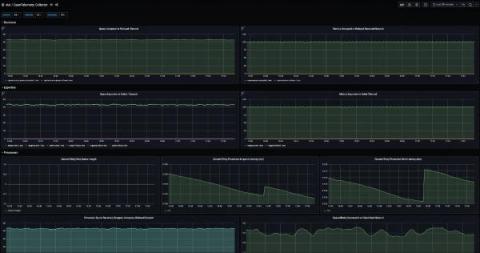
How to collect Prometheus metrics with the OpenTelemetry Collector and Grafana

OpenTelemetry is a set of APIs, SDKs, tooling, and integrations that are designed for the creation and management of telemetry data such as traces, metrics, and logs. One of the main components of OpenTelemetry, or OTel for short, is the OpenTelemetry Collector. The OpenTelemetry Collector, or Otel Collector, is a vendor-agnostic proxy that can receive, process, and export telemetry data.

How Gremlin runs a GameDay

You might be familiar with GameDays at this point. From watching our Introduction to GameDay webinar, viewing our Demo video, and reading our tutorial, you’ve probably learned that GameDays were created with the goal of increasing reliability by purposely creating major failures on a regular basis. Better yet, perhaps your own team has run a GameDay and learned something new about their services’ behavior during failure scenarios.

Understanding Service Level Objectives

True reliability takes into account all of the services that exist in your software environment — which is why it can get so complicated. An ecommerce site, for example, might have services that update current inventory in near real time, process payments in the shopping cart, trigger email receipts to send, kick off fulfillment orders, etc. And if one of these services isn’t operating at its best, that can mean money — and in some cases, customers — lost for the company.

Concurrency in Golang: Building a Data Pipeline for Monitoring Microservices from Scratch

Time and resource consumption have become the driving forces of developing modern applications. While building cloud-native applications, it’s important to ensure that you have the most optimized code in place, and oftentimes that means leveraging concurrency. While writing concurrent code may sound overwhelming at first, Golang makes it extremely easy to get a handle on.

Kubernetes Basics: Clusters, Pods, and Nodes

Containerization and Kubernetes have taken the DevOps world by storm in the past decade. More and more companies have turned to this technology to enhance their deployment workflows and cut costs. Examples like Pokemon Go and OpenAI would not have been feasible without Kubernetes. While Kubernetes is a growing technology in the current times, it comes with a relatively steep learning curve.