Operations | Monitoring | ITSM | DevOps | Cloud

How Do You Measure the Impact of Product Marketing On Customer Success?

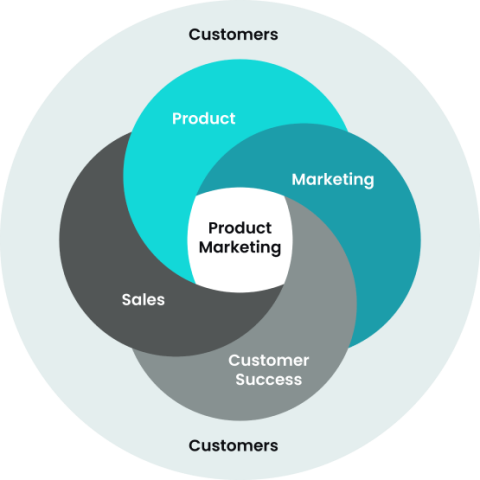
When marketing your product, you work your way towards your end goal of customer success. This is when your customer gets what they want in the way that they wanted it. At its core, when a customer reaches customer success, that means your products have a perceived value. ‍ But how will you be able to know if your customers have found customer success? In this article, we’ll be breaking down the key metrics to track during the stages of your product marketing strategy.
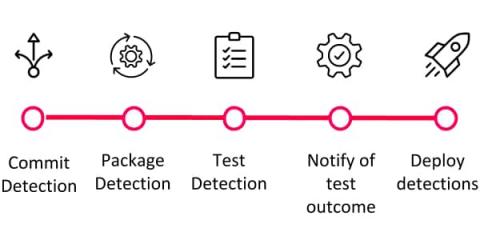

CI/CD Detection Engineering: Dockerizing for Scale, Part 4

Splunk builds innovative tools which enable users, their teams, and their customers to gather millions of data points per second from an ever-growing number of sources. Together, Splunk helps users leverage that data to deliver, monitor, improve, and secure systems, networks, data, products, and customers with industry-leading solutions and expertise.

Using gRPC with Golang

In this tutorial, you will learn how to work with the gRPC Golang library for microservice communication by creating a simple note-taking application. APIs and service-to-service communication are what make modern microservice architecture possible. REST is generally the preferred implementation pattern, but if you only use REST, you could miss out on the significant performance gains that gRPC can offer. gRPC can provide better speed and efficiency than REST APIs.

Override default resource status: New feature in StackStorm 3.7.0

Coming up in StackStorm 3.7.0 is a new feature that allows administrators of a StackStorm installation to “override” the default resource status that was specified by the pack owners. One of the benefits of StackStorm is the large variety of packs available on the StackStorm Exchange. But sometimes, users may not want the default content status provided by the community packs. We’re introducing a new feature into StackStorm 3.7.0 to make this easier to manage.

SIEM: Introduction to SIEM and 4 Top SIEM Tools

Security Information and Event Management (SIEM) technology has become a fundamental part of identifying and guarding against cyber attacks. It is one of the essential technologies powering the modern security operations center (SOC). SIEM is an umbrella term that includes multiple technologies, including log management, security log aggregation, event management, event correlation, behavioral analytics, and security automation.

Kubernetes Multi-Tenancy

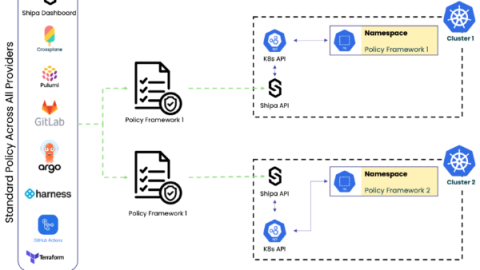
Things would be much simpler if we based all we built on Kubernetes on a single tenant type of architecture, meaning a single application running on the entire Kubernetes cluster with a single team who could access it. As teams scale Kubernetes adoption within their organizations, they see a different scenario instead, one with multi-tenant deployments performed by multiple teams and, most probably, across multiple clusters.

Elastic Observability 8.2: Tail-based sampling, plus more serverless visibility for AWS

As more organizations adopt cloud-native technologies and microservices-based architectures, application troubleshooting is becoming increasingly complex. With so many moving parts in an environment that is both dynamic and distributed, it is difficult to get the full picture. Yet complete visibility is crucial in order to find and fix issues quickly — especially ones that impact the bottom line.

Elastic Enterprise Search 8.2: Relevance controls for Elasticsearch

Elastic Enterprise Search 8.2 introduces new ways to ingest, search, and monitor data, giving developers the productivity benefits of using out-of-the-box capabilities along with the power and flexibility inherent in Elastic Stack tools. Operators also gain even more transparency for managing search experiences and observing search performance. For a visual walkthrough of some of the key capabilities in 8.2, check out the latest installment of What’s new in Enterprise Search on YouTube.

Using Rancher Desktop for Local Kubernetes Development

Rancher Desktop is an all-in-one solution for container management on your desktop workstation. It provides an easily maintained Kubernetes installation that runs on your local machine and streamlines setting up containerized workflows in development. Assembling a Kubernetes cluster from scratch can be daunting, because multiple components must work in unison. With Rancher Desktop, you get everything preconfigured with one software download.

How to Monitor Riak Metrics with OpenTelemetry

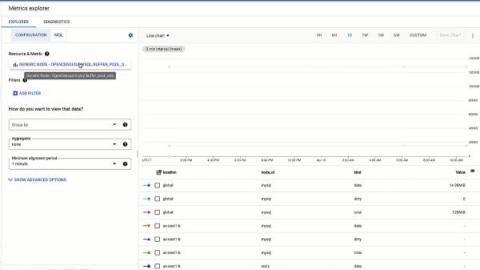
observIQ’s OpenTelemetry members contributed Riak metric monitoring support to OpenTelemetry! You can now monitor your Riak agent performance with OpenTelemetry, and deploy simply with the oIQ OpenTelemetry Collector. You can add the Riak metric receiver to any OpenTelemetry collector. This post demonstrates a configuration for shipping metrics to Google Cloud Operations with OpenTelemetry components.