Operations | Monitoring | ITSM | DevOps | Cloud

Microsoft will disable SMB1 client this year, what does this mean for your customers?

To be clear, SMB V1 has been deprecated, unsecure, and not recommended for a long time. But Microsoft is now taking the next step towards removing it from Windows entirely. In recent years, Microsoft had stopped installing SMB1 server on all Windows versions by default; however, they have kept installing the SMB1 client in Home and Pro versions of Windows. This was meant to allow end users to connect to various devices, including NAS, which only supported SMB1.
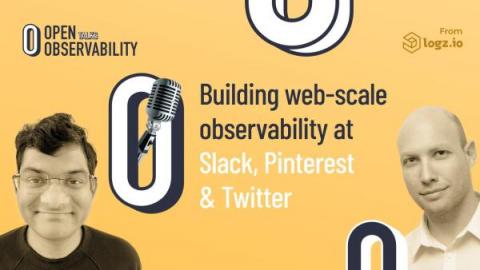
Slack's New Logging Storage Engine Challenges Elasticsearch

Elasticsearch has long been the prominent solution for log management and analytics. Cloud-native and microservices architectures, together with the surge in workload volumes and diversity, have surfaced some challenges for web-scale enterprises such as Slack and Twitter. My podcast guest Suman Karumuri, a Sr. Staff software engineer at Slack, has made a career on solving this problem. In my chat with Suman, he discusses for the first time in a public space a new project from his team at Slack: KalDB.

We built the "Netlify for backend" that runs on your AWS account!

In 2020, my co-founders and I had this crazy idea of bringing a better Developer Experience on top of AWS. You know, the one that you can easily use with "the promise of the cloud" that any developer can take advantage of and deploy their next successful product in seconds. Somehow, the missing product of AWS 😅. This is where Netlify was an excellent source of inspiration. A nice Developer Experience, where deploying an application is as simple as pushing your code on Git.

Service dependencies help you instantly discover all services impacted by an incident

When an incident happens, most organizations have a way of identifying all affected services. The trouble is, it’s often a human-centered process that depends on the knowledge of key individuals or manually updated documentation. There might be a version in your alerting tool, a version in your corporate Wiki, and a different version still in your team’s head.

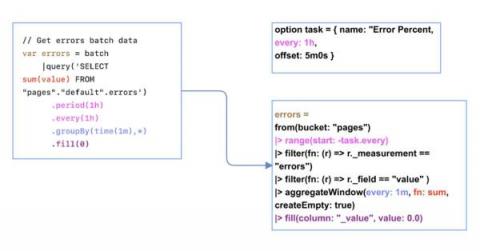
TL;DR InfluxDB Tech Tips: From TICKscripts to Flux Tasks

If you’re a 1.x user of InfluxDB, you might be a Kapacitor user as well. If so, you’re also familiar with TICKscripts, the data processing and transformation language for Kapacitor, the batch and stream processor for InfluxDB. Kapacitor is a great tool, but it’s largely a black box, so using and implementing TICKscripts to execute data processing tasks, checks, and notifications can be a challenging developer experience.

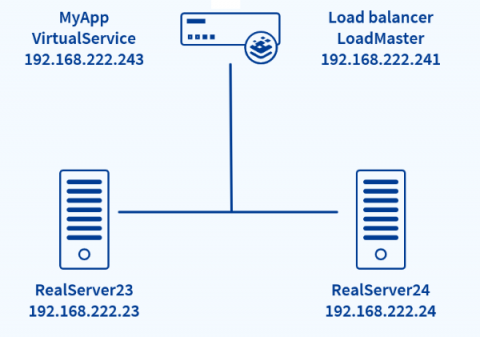
How To Configure Flowmon and WhatsUp Gold

In the previous “Flowmon and WhatsUp Gold: Discover application experience issues through single pane of glass” blog post we have demonstrated how IT Infrastructure Monitoring (WhatsUp Gold) and Network Performance Monitoring & Diagnostics (Flowmon) work seamlessly together to report on application performance, user experience and infrastructure status.

C-Suite Reporting with Log Management

When security analysts choose technology, they approach the process like a mechanic looking to purchase a car. They want to look under the hood and see how the product works. They need to evaluate the product as a technologist. On the other hand, the c-suite has different evaluation criteria. Senior leadership approaches the process like a consumer buying a car.

Everything You Need to Know About Golang App Testing

Oftentimes, people starting their journey in the field of software development don’t understand the importance of testing, including Golang app testing, until late in their careers. It’s essential to think about testing as an integral part of the software development lifecycle (SDLC) not only in theory but in practice, too. When building cutting-edge software, you need to make sure that the version being upgraded is error-free and that almost all of the failure cases have been considered.

Observability for New Teams: Part 1

Any significant shift in an organization’s software engineering culture has the potential to feel tectonic, and observability (o11y for short)—or more specifically, Observability Driven Development—is no different. Leaning into observability, which calls for tool-enhanced investigation, hypothesis testing, and data richness can be cumbersome even for the most veteran of teams.