Last week, an article from SiliconAngle came out detailing the challenges facing cybersecurity professionals. Companies are in desperate need of solutions to deal with cloud-native applications that exist in fast-paced environments. The security and IT teams monitoring these applications need scalable and flexible solutions that drive actionable insights. That’s why we built Cribl Stream.
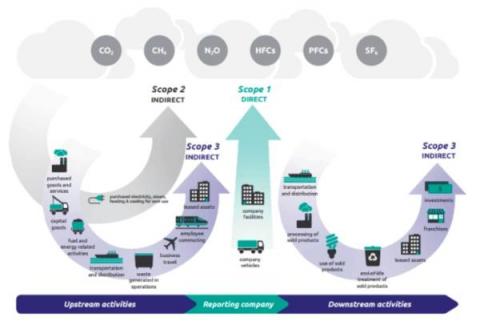
Simple questions can be overwhelming and not knowing the answer after a mouse click is no longer an option: Sustainability is top of mind for organizations across all verticals and Splunk can help with the power of data. Our upcoming Sustainability Toolkit based on the Splunk platform equips organizations with capabilities to gain deep insights into their carbon footprint and as such empowers them to take the necessary actions towards their carbon neutrality goals.
Cloud native is a term that’s been around for many years but really started gaining traction in 2015 and 2016. This could be attributed to the rise of Docker, which was released a few years prior. Still, many organizations started becoming more aware of the benefits of running their workloads in the cloud. Whether because of cost savings or ease of operations, companies were increasingly looking into whether they should be getting on this “cloud native” trend.
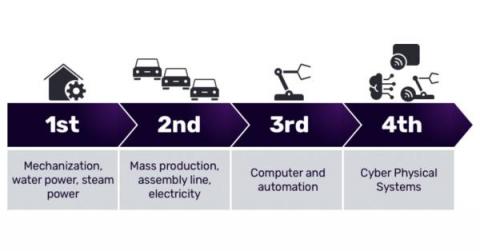
The industrial revolution was a watershed period in human history. The shift from piecemeal, cottage-industry work to mechanized manufacturing transformed the way humans work. Since the 18th century, successive waves of innovation, such as the assembly line and the computer, continued to alter and change the nature of manufacturing. Today, we find ourselves in the midst of another industrial transformation.
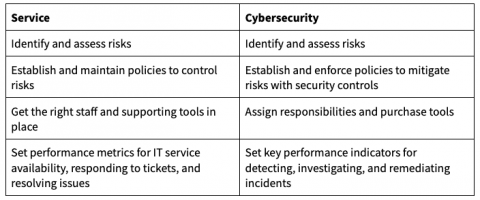
As an IT operations manager, you spend a lot of your time mitigating service outages and service level risks. You worked diligently to get the right people, products, processes, and partners in place to meet your goals. You managed to ensure continued uptime. You’ve reduced the number of tickets and the cost per ticket. And for your efforts, you’re rewarded with managing your company’s cybersecurity program. The problem? You’re not a security specialist.
Technologies exist to limit and spot the number of phishing emails that come into your business. Still, humans are the last line of defense against social engineering attacks like this at the end of the day. At some point, you're going to "be beat" as an employer or MSP. Instead of locking everything down and slowing business communications, staff from the c-suite on down need to be equipped to identify phishing emails, so the worst happens in a training environment and not the real thing.
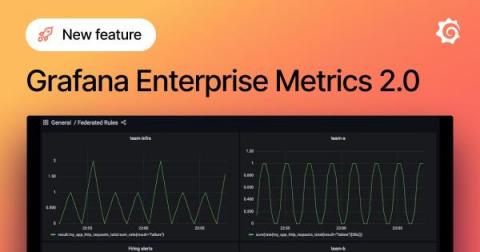
On the heels of launching our new open source TSDB Grafana Mimir, we are excited to introduce Grafana Enterprise Metrics 2.0. GEM 2.0 is built on top of Grafana Mimir 2.0, our easy-to-operate, high-scale database which we’ve shown can handle upwards of 1 billion active series. That means that GEM 2.0 inherits all of the highlights of Mimir, including easy deployment, native multi-tenancy, high availability, durable long-term metrics storage, and exceptional query performance.
A NoSQL database provides a mechanism for data storage and retrieval, without using the tabular relations associated with relational databases. Originally referred to as "non-SQL" or "non-relational" databases, NoSQL databases are increasingly used in big data and real-time web application environments. NoSQL systems are also sometimes called “Not only SQL” to emphasize that they may support SQL-like query languages or sit alongside SQL databases in polyglot-persistent architectures.
Good security may come from strong defenses, but strong security comes from a good offense. This is especially true for network security, where minutes can make the difference between a breach and a near miss. For example, if an unknown IP address triggers an alert for suspicious or abusive behavior, the faster you can isolate and block that address, the less likely it is that the person or entity at the other end can do damage.