Operations | Monitoring | ITSM | DevOps | Cloud

5 Reasons Why NIS2 Directive Preparation Should Start Now, Part Two: Implementation Takes Time

In a previous blog post, I discussed the two main areas to audit before the European Union’s updated Network and Information Security Directive (NIS2) becomes ratified law in October 2024. Specifically, these audits would: Identify your gaps with the NIS2 directive’s requirements now. Review your current supply chain security flaws. Now that we’ve discovered these security flaws, we must fix them — before time runs out in October 2024.


How to schedule an AzCopy Data Transfer

AzCopy is a command-line utility designed for copying data to and from Microsoft Azure Blob and File storage. It is a very powerful tool provided by Microsoft that helps users to copy and transfer data efficiently and securely. One of the key features of AzCopy is the ability to schedule transfers. Scheduled transfers can be extremely useful in managing data and ensuring that data is moved or backed up at the most appropriate times.

How to deploy Hello World Elastic Observability on Google Cloud Run

Elastic Cloud Observability is the premiere tool to provide visibility into your running web apps. Google Cloud Run is the serverless platform of choice to run your web apps that need to scale up massively and scale down to zero. Elastic Observability combined with Google Cloud Run is the perfect solution for developers to deploy web apps that are auto-scaled with fully observable operations, in a way that’s straightforward to implement and manage.

Advanced Monitoring and Observability Tips for Kubernetes Deployments

Cloud deployments and containerization let you provision infrastructure as needed, meaning your applications can grow in scope and complexity. The results can be impressive, but the ability to expand quickly and easily makes it harder to keep track of your system as it develops. In this type of Kubernetes deployment, it’s essential to track your containers to understand what they’re doing.

Helm Dry Run: Guide & Best Practices

Kubernetes, the de-facto standard for container orchestration, supports two deployment options: imperative and declarative. Because they are more conducive to automation, declarative deployments are typically considered better than imperative. A declarative paradigm involves: The issue with the declarative approach is that YAML manifest files are static.

Introducing Error Groups to the Raygun API

We’re excited to announce an important extension to our API. After rigorous research, testing, and feedback, we’ve launched the Error Groups endpoints. This powerful new addition aims to enhance your monitoring experience and better handle errors across your applications. Our primary aim with the introduction of these endpoints is to offer you a more detailed view into your applications’ error groups, and to offer a way to update their statuses using the API.

Cloud Repatriation: The Unforeseen Reversal in Cloud Computing Trends

At first glance, this may appear counterintuitive. After all, aren’t public clouds lauded for their scalability, flexibility, and cost-efficiency? However, a closer examination reveals a more nuanced reality. This article delves into the driving forces behind cloud repatriation, helping you determine whether it might be the right fit for your organization.

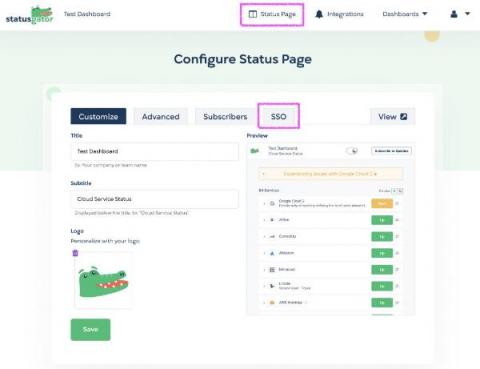
New Feature: Enhance Security with Status Page SSO

We’ve heard your feedback and it’s here: Status page SSO is now available on our Enterprise plan. Status Page Single Sign-On (SSO) empowers StatusGator customers to safeguard their status pages through a seamless Single Sign-On experience. You can now restrict access to your status page to only your team, employees, or users who have SSO access through your organization’s identity provider.