Operations | Monitoring | ITSM | DevOps | Cloud

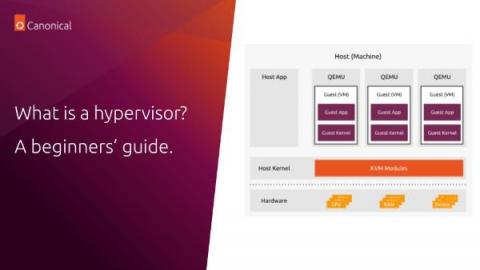
What is a hypervisor? A beginner's guide

In the realm of virtualisation and cloud computing, the hypervisor is a critical component that enables the seamless operation of multiple virtual machines (VMs) on a single host. While virtualisation is a technology, the hypervisor is its actual implementation. In this beginner’s guide, we will explore the fundamentals of hypervisors, their types, and how they differ from container runtimes. We will also review some of the leading hypervisors available today.
Telegraf Deployment Strategies with Docker Compose

This article, written by Shan Desai, was originally published on his blog and is reposted here with permission. Shan is a Software engineer currently employed at Emerson Discrete Automation and is an Open-Source Contributor / DIY Tech Enthusiast currently working with Industrial IoT. Telegraf is widely used as a metric aggregation tool thanks to the diverse number of plugins it provides that interface with a multitude of systems without having to write complex software logic.

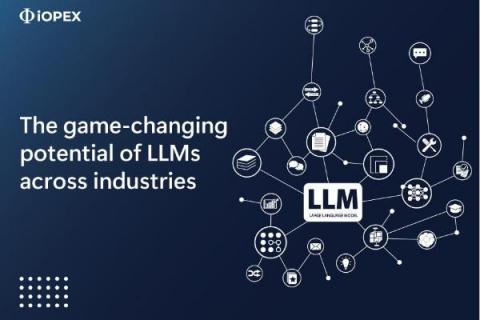
The Future of Large Language Models (LLMs) in Transforming Industries

Large Language Models (LLMs) have emerged as a powerful force capable of reshaping industries across the board. From small startups to multinational corporations, organizations are actively experimenting with LLMs, recognizing their potential to disrupt the market. This blog explores the predictions from major industry leaders regarding the future of LLMs and provides insights on how businesses can leverage this technology to gain a competitive edge.

Simplifying Data Lake Management with an Observability Pipeline

Data Lakes can be difficult and costly to manage. They require skilled engineers to manage the infrastructure, keep data flowing, eliminate redundancy, and secure the data. We accept the difficulties because our data lakes house valuable information like logs, metrics, traces, etc. To add insult to injury, the data lake can be a black hole, where your data goes in but never comes out. If you are thinking there has to be a better way, we agree!

Understanding the API economy

APIs (Application Programming Interfaces) have been around for decades, but although the concept emerged as far back as the 1940s, it wasn’t until the early 2000s and the efforts of eBay, Salesforce, and Amazon that really put them on the map. APIs today are ubiquitous - any company developing software will likely have an API for customers and partners - and research suggests the majority of enterprises consuming APIs are focused on strategies for easier consumption and management of APIs.

Lookup Tables and Log Analysis: Extracting Insight from Logs

Extracting insights from log and security data can be a slow and resource-intensive endeavor, which is unfavorable for our data-driven world. Fortunately, lookup tables can help accelerate the interpretation of log data, enabling analysts to swiftly make sense of logs and transform them into actionable intelligence. This article will examine lookup tables and their relationship with log analysis.

Integrating Azure Files with Windows Server

In today’s digital world, where data is considered the new oil, organizations are consistently looking for efficient ways to store and manage their invaluable information assets. Microsoft’s Azure Files and Windows Server are two technologies at the forefront of this technological evolution.

What is the SPACE developer productivity framework?

The SPACE framework is an acronym for an approach to measuring, understanding, and optimizing engineering productivity. Outlined by researchers from GitHub, Microsoft, and the University of Victoria, it encourages leaders to look at productivity holistically, placing leading metrics in context with each other and linking them to output, often team goals, rather than individual effort. The SPACE framework breaks productivity into five metrics.

10 FinOps Diagrams To Help You Better Understand The Value Of FinOps

By now FinOps has proven its value — so much so that the web is full of helpful in-depth guides, broad overviews, bite-sized articles, and resource lists on the subject. But if you're preparing to pitch a FinOps program at your company, you need to convey only the most important points in a way that's both impactful and succinct. That's when it's time to call in the visuals.