OpenTelemetry for dummies: ELI5
What is OpenTelemetry? Why is it important? Do SREs need to adopt OTel? An Explain It Like I'm 5.


What is OpenTelemetry? Why is it important? Do SREs need to adopt OTel? An Explain It Like I'm 5.
For Software Houses, developers are as important as customers are to a retail organization – if the Developer Experience (DX / DevExp / DevEx) is poor, then work simply will not get done effectively and the best and the brightest are likely to leave for an employer who offers a better experience and hence, more productivity and job satisfaction. Long-term frustrated employees and staff attrition tend to impact product quality and lead to weaker software applications.
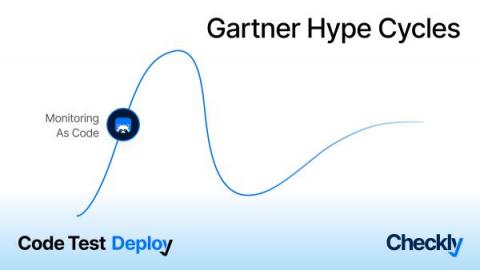
Earlier this week we shared some exciting news. Checkly has made its mark in not one, but two Gartner Hype Cycles reports. We're being recognized for something we're super passionate about - Monitoring as Code (MaC). This recognition comes in the Hype Cycle for Monitoring and Observability and the first ever Hype Cycle for Site Reliability Engineering. It's a big deal for us, and here's why it should matter to you, too.
If you’re new to logging, you might be tempted to collect all the data you possibly can. More information means more insights; at least, those NBC “the more you know” public services announcements told you it would help. Unfortunately, you can create new problems if you do too much logging. To streamline your log collection, you can apply some filtering of messages directly from the log source. However, to parse the data, you may need to use a Grok pattern.
The Kubernetes networking landscape is shifting. The traditional Kubernetes Ingress approach is being complemented and, in some cases, replaced by a more powerful, flexible, and extensible standard: the Kubernetes Gateway API. Kubernetes has become the go-to platform for orchestrating and managing containerized applications. A key aspect of Kubernetes that's crucial for the functionality of these applications? Networking.
Distributed tracing is a powerful technique that allows you to track the flow and timing of requests as they navigate through a system. By linking operations and requests between multiple services, distributed tracing provides valuable insights into system performance and helps identify bottlenecks. In this blog post, we will delve into the benefits of distributed tracing, explore its relevance for various application architectures, and uncover how it operates behind the scenes.
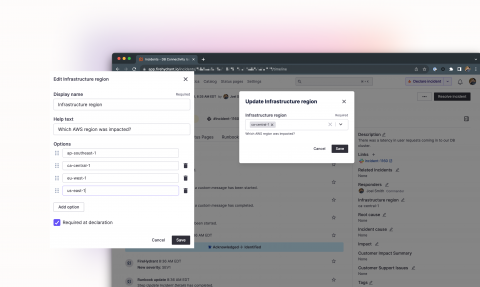
Today we're releasing custom fields, a powerful new feature that empowers you to tailor FireHydrant to your organization's specific needs and capture essential incident details. Custom fields help you track critical states, involved parties, resolution specifics, affected services, messages, and more — almost anything you want! — all aligned with your unique workflows. Regardless of the size of your team or the maturity of your processes, custom fields adapt to your workflow.
Kelverion is invested in the success of our customers fulfilling their IT automation goals. As part of this endeavor, we provide various resources to ensure our customers can implement and manage their IT automation goals with precision and efficiency. Some of our resources include our webinars, blogs, technical discussions, and guides for things such as ‘Best Practices’ or ‘What’s New’ in the field of IT Automation.
In addition to the built-in user authentication that utilizes usernames and passwords, Grafana also provides support for various mechanisms to authenticate users, so you can securely integrate your instance with external identity providers. We are excited to announce that with the release of Grafana 10.0, we have introduced a new user interface that simplifies the configuration of SAML authentication for your Grafana instances.
Did you like our previous blog about domain hijacking? Let’s see if you know all the HTTP codes now. There is a complex series of dialogues happening behind the scenes every time you use the internet. Your browser and servers are always communicating — and while most people don’t understand the internet’s language, it’s definitely essential for developers and SEO experts to understand it.