Operations | Monitoring | ITSM | DevOps | Cloud

How to build zone-redundant cloud instances and clusters

Redundancy is a core tenet of cloud computing. While major cloud platforms have high targets for reliability, they can still fail, and it’s important for teams to have a plan for when they do. But how can you build services that can withstand something as disruptive as a datacenter outage? In this blog, we’ll show you how to prepare for availability zone outages by proactively detecting services operating in a single zone.

Reducing MTTR with the Elastic Observability AI Assistant

In this quick overview, discover how the Elastic Observability AI Assistant can streamline your operations and significantly reduce Mean Time to Recovery (MTTR). In just a minute or two, we'll highlight the key features and benefits of integrating AI into your observability strategy. Perfect for IT professionals and SREs who are looking for an efficient solution to improve system uptime and performance. Watch now to learn how AI can make a real difference in your response times!

Performance Optimization with Elastic Observability

Welcome to our quick overview of Performance Optimization with Elastic Observability! In this video, we explore the basics of how Elastic Observability can enhance your system’s performance monitoring and management. Discover key features that help you keep your applications running smoothly and efficiently, without deep diving into complexities. Perfect for anyone looking to get a quick grasp of what Elastic Observability can offer.

Webinar - 2024 State of Software Production Readiness

98% of engineering leaders reported at least one major consequence of failing to meet production readiness standards. To better understand how teams are addressing new challenges in production readiness, Cortex recently conducted a survey of engineering leaders at companies with more than 500 employees in North America, Europe, and AsiaPac. The survey included questions pertaining to production readiness standards, tools, struggles, and desired future state.


Bring more context to your code with Compass

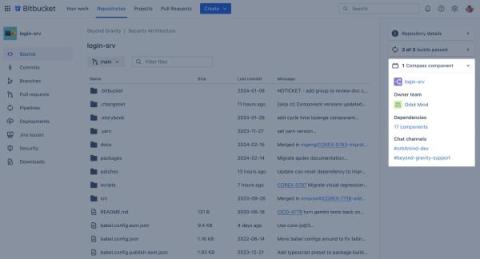
Understanding and interacting with code repositories can be frustrating: you often don't get all of the information you need to get your work done efficiently and effectively. Who owns the repository? What are its dependencies? Where do I ask for help about interacting with it? This lack of context around code, and the time it takes to find it somewhere in the bowels of your organization, slows everything down.