Operations | Monitoring | ITSM | DevOps | Cloud

The Fatal Unconnectedness of Incumbents from Customers: The Tale of a Race Against the Clock

This tale is based on an actual event that happened to one of our Cribl Search customers. It highlights a massive gap between the urgent needs of modern businesses and the outdated, draconian terms dictated by traditional SIEM vendors. While the events are real, a touch of dramatization was added for the fun of it. Why not?
Deleting Fields from Logs: Why Less is Often More

Logs serve as an invaluable resource for monitoring system health, debugging issues, and maintaining security. But as our applications grow more complex, the volume of logs they generate is increasing exponentially. While logs are crucial, not all log data is equally valuable. With the surge in volume, costs associated with storing and analyzing logs are skyrocketing, impacting both performance and cost. The need for effective log management is more urgent than ever.

Building Organizational Trust for Cloud Optimization Software

You’ve loaded data into Densify and after reviewing recommendations your developers don’t want to take the recommended action – they aren’t trusting, yet. This is one of the top issues identified by the FinOps Foundation and many of our customers of Densify – but not all. Let’s explore what some customers do differently to build organizational trust in taking optimization recommendations.

Helm deployments to a Kubernetes cluster with CI/CD

Containers and microservices have revolutionized the way applications are deployed on the cloud. Since its launch in 2014, Kubernetes has become a de-facto standard as a container orchestration tool. Helm is a package manager for Kubernetes that makes it easy to install and manage applications on your Kubernetes cluster. One of the benefits of using Helm is that it allows you to package all of the components required to run an application into a single, versioned artifact called a Helm chart.

Item Detail Page Updates

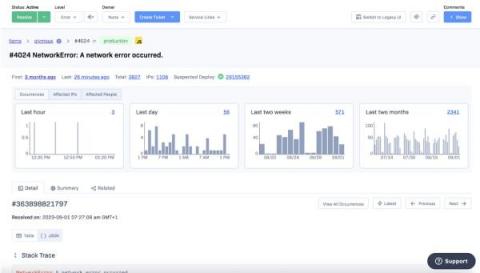
We’ve been listening to all the great feedback we’ve received on the new item detail page, and we’re pushing changes to help make investigating and understanding Rollbar items easier, quicker, and more efficient. The most visible change is that the context graphs have been moved to a single full-width view on the desktop so that you can immediately see the patterns of when occurrences happened, helping to spot patterns in behavior that can give insights into causes.

An Introduction to Enterprise Mobility Management (EMM)

Enterprise Mobility Management or EMM is a holistic set of practices and technology oriented to help you improve your management of mobile devices, the applications, and the data they enable and enforce your information security policies. Done well, it can help you keep track of phones and tablets, and keep your data protected.

What makes a good open source community?

Whenever you use open source software, you benefit from the community that surrounds it — whether it’s a bug fix, better documentation, a helpful tutorial or something else. We at Grafana Labs benefit from the open source community, too: from your participation, and the many OSS components we use in the development of Grafana itself. But what makes an open source community successful, exactly? And how do you build and nurture one?

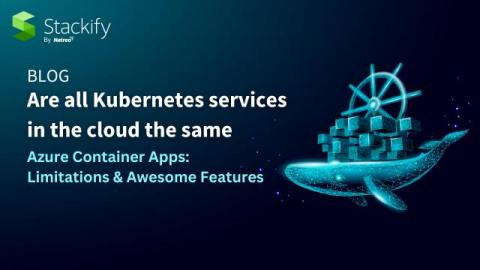
Are all Kubernetes services in the cloud the same? Azure Container Apps: Limitations & Awesome Features

An advanced, open-source technology called Kubernetes is used to manage, scale and deploy containerised applications automatically. Kubernetes offers a strong architecture that enables development and operations teams to effectively manage applications of several containers. Kubernetes was made by Google engineers. They shared it for free in 2014, and now a group called CNCF takes care of Kubernetes. People really like using Kubernetes to manage apps inside containers.

Understanding a release-first approach to software supply chain management

For anyone involved in software development, the “infinity loop” is synonymous with DevOps — and rightfully so. We know that software is rarely in a static state for very long. Continuous updates are required to meet the demands of users and to deliver more value, faster than the competition.