Operations | Monitoring | ITSM | DevOps | Cloud

Data at the edge: Meet modern data processing demands with edge computing

We’ve all experienced latency in some form. It’s unfortunately something we’re all too familiar with. We’ve even gone so far as to accept it as a regular albeit undesirable part of the user experience. Yet despite various steps taken over the years, it still exists and is as disruptive as ever.

A Quick Look at How Contract Manufacturing Can Improve Operational Efficiency

In today's highly competitive and constantly evolving business landscape, operational efficiency is key to staying ahead of the competition. Contract manufacturing has emerged as a viable solution for companies aiming to streamline their operations and enhance their overall efficiency.

How Technology Empowers Engineering Companies for Success

With engineering projects becoming more and more complex, companies in the engineering industry are having to adapt and innovate quickly to remain competitive. Thankfully, by leveraging technology advancements such as cloud computing, artificial intelligence (AI), digital toolsets, and automated processes, many have been able to succeed.

Scaling Window Event Forwarding with a Load Balancer

Scaling to collect Windows Event logs with the Windows Event Forwarding Source can be tricky. Luckily, you can use a load balancer, and with some math to scale the number of workers to collect the amount of data you expect, you can use workers to collect Windows logs from a large number of endpoints. Endpoint logs are the lifeblood of observability in an incident response program.

The 10-Step Guide To Your Online Presence with Squarespace

Currently, there are about 1.13 billion websites around the world. Actually, 3 new websites are created every second. Even more so, it has become particularly powerful to pair a website with an ecommerce platform, thereby broadening customer reach and 24/7 accessibility. And this global e-commerce market is expected to total a whopping$6.3 trillion in 2023. 79% of shoppers already shop online at least once a month.

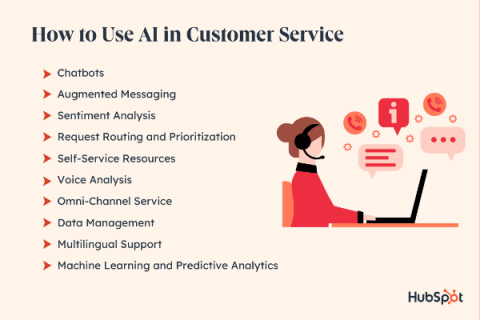
6 Underutilized Ways to Use AI in Customer Service in 2023

Artificial Intelligence (AI) is surely revolutionizing numerous industries. The AI market is projected to grow from $150 billion in 2023 to $1,345 billion in 2030, at a whopping 36.8% Compound Annual Growth Rate (CAGR). And at least 35% of companies are already using AI in their business, and an additional 42% are exploring it. However, the exhaustive list of AI business applications is still in the early stages.

The Top 4 Use Cases for Generative AI in Customer Experience

Up until recently, machines mainly focused on analyzing large, existing amounts of data and finding patterns for a multitude of use cases. This is called “traditional AI.” But lately, machines have also started creating new content. And this is now known as “generative AI.” And given the rise of ChatGPT and its peers, generative artificial intelligence (AI) has quickly emerged as one of the most transformative technologies in recent years.

Platform Engineers: Applied Best Practices Are Baked-in to Kubernetes Monitoring

Operating Kubernetes reliably and efficiently involves adhering to a set of best practices. These practices help ensure the stability, scalability and maintainability of your Kubernetes clusters and their applications. It's crucial for platform teams (responsible for the infrastructure) and software development teams (responsible for deploying applications) to work together in applying these practices.

Making your JavaScript projects less noisy

If you’re using Sentry for JavaScript error monitoring, you may be familiar with a common challenge: sifting through noisy, low-value errors that hinder identifying high-priority issues for you and your team. Capturing errors in JavaScript browser project can be tricky. Why? Well, it’s not just a single environment.

Unlocking the Power of Hosted Graphite and Machine Learning

Monitoring and optimizing IT infrastructure, applications, and networks is crucial for businesses in today's digital landscape. It allows them to proactively identify issues, ensure optimal performance, and deliver a seamless user experience. However, traditional monitoring methods often fall short when it comes to handling the increasing complexity and scale of modern systems. That's where hosted graphite and machine learning come into play.