Operations | Monitoring | ITSM | DevOps | Cloud

The Significance of Root Cause Analysis in Revolutionizing Enterprise IT Operations

Ever been jolted awake by a midnight alarm because some server decided to take a sudden break? If you’ve been in IT operations, you know this isn’t just about fixing a problem; it’s about understanding and fixing it. Think of a favorite detective show, the detective is not just identifying the culprit, they are aiming to unravel the mystery “who done it?” and understand the motive.

Help reduce resource consumption: Put your preview environments on pause

With Upsun, every Git branch maps to a preview environment which is an exact and isolated copy of your live application—including all data, services, and files. They are usually created to build new features, apply security patches, or upgrade dependencies in full isolation and before deploying to production. Although there is a catch—preview environments are often left idle waiting for someone to review and approve any changes made.

Innovative apps from the inside out

At ServiceNow, we bring together builders, problem-solvers, and creative thinkers to push the boundaries of possibility with innovative apps. Our Innovation Lab serves as a collaborative hub where employees can develop new apps on the Now Platform to creatively solve problems and where internal innovations can be used by our customers. During two-week, focused work sessions called innovation sprints, employees submit their ideas for new apps.

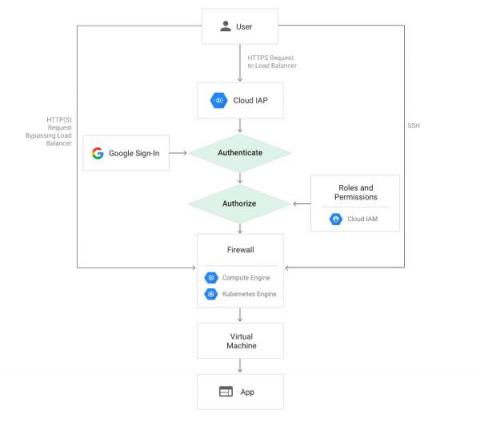
Authenticating Users with Google IAP in Rails

Google Identity-Aware Proxy (IAP) is a Google Cloud service that provides authentication for web applications. This service simplifies the process of building web applications authenticated with Google, eliminating the need to handle user-related concerns within your application code. This is especially valuable for internal applications within organizations that already utilize GSuite. It is straightforward to use, particularly when operating on Google Cloud.

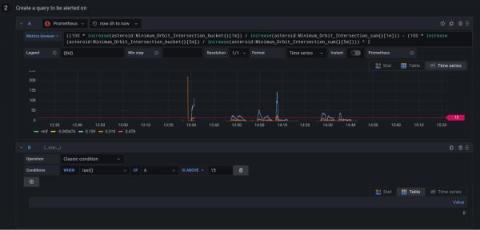
Monitoring machine learning models in production with Grafana and ClearML

Victor Sonck is a Developer Advocate for ClearML, an open source platform for Machine Learning Operations (MLOps). MLOps platforms facilitate the deployment and management of machine learning models in production. As most machine learning engineers can attest, ML model serving in production is hard. But one way to make it easier is to connect your model serving engine with the rest of your MLOps stack, and then use Grafana to monitor model predictions and speed.

DX NetOps In Action: How Altice Accelerates Network Transformation with Broadcom

Altice Portugal is a wholly owned subsidiary of Altice Group, a multinational cable and telecommunications company. They have a presence across Europe, including in Belgium, France, Luxembourg, Portugal, and Switzerland, as well as in the Dominican Republic, the French West Indies, and Israel. With annual revenues of more than $2.8 billion (2,629 million Euros), Altice Portugal is Portugal’s largest telecom company. Altice offers fixed, mobile, and satellite network services to consumers.

Top Microsoft Azure Cloud Services Explained with Use Cases

Microsoft Azure is one of the most comprehensive and broadly adopted cloud service providers in the industry, offering over 200 fully featured services from data centers globally. A wide spectrum of organizations across all verticals use Azure – to lower costs, become more agile and innovate faster. Tight integrations with the Microsoft ecosystem and product portfolio make Azure highly attractive to many.

How to secure your database

Cybersecurity threats are increasing in volume, complexity and impact. Yet, organisations struggle to counter these growing threats. Cyber attacks often intend to steal, damage, hijack or alter value-generating data. In this article around database security, we use the NIST framework to lay out the common controls that you can implement to secure your databases. Let’s start by discussing the potential impact of unsecured databases.

Choosing a Client Library When Developing with InfluxDB 3.0

A common question we get asked is “what client library should I use with InfluxDB 3.0?” This question isn’t as simple as it may seem. It can get confusing when deciding which client library to use while developing applications to write to and query from InfluxDB. There are numerous options to choose from and the answer may differ based on the following criteria: At first, this seems like an easy answer.