Operations | Monitoring | ITSM | DevOps | Cloud

Monitor all operating systems with one solution: Icinga 2

We as a company build monitoring software. And we have committed to diversity. It is just logical and consequent for us to apply this principle not only to the people who do the work, but also to the work itself. To the monitoring software we build. Especially to Icinga 2 which, in a perfectly monitored environment, runs on every single machine. I.e. on every single OS powering all those machines.

What Is AI Monitoring and Why Is It Important

Artificial intelligence (AI) has emerged as a transformative force, empowering businesses and software engineers to scale and push the boundaries of what was once thought impossible. However as AI is accepted in more professional spaces, the complexity of managing AI systems seems to grow. Monitoring AI usage has become a critical practice for organizations to ensure optimal performance, resource efficiency, and provide a seamless user experience.

DevOps language trends 2023: Top tools used by elite software delivery teams

As organizations continue to embrace CI/CD and DevOps in their quest for shorter, more reliable delivery cycles, the choice of programming languages becomes even more critical. The language used to build your applications can affect everything from developer happiness and productivity to your organization’s performance on the four key software delivery metrics.

PagerDuty Recognized in 12 2023 Gartner Hype Cycle Reports

While most of the world knows us for on-call management, we’ve been hard at work expanding the PagerDuty Operations Cloud to other areas like AIOps, Process Automation and Customer Service Operations (CSOps). Underscoring our commitment to redefining digital operations management for our customers, our commitment to R&D and delivering the best products and platform has resulted in PagerDuty being recognized in 12 distinct 2023 Gartner Hype Cycle reports across nine unique categories.

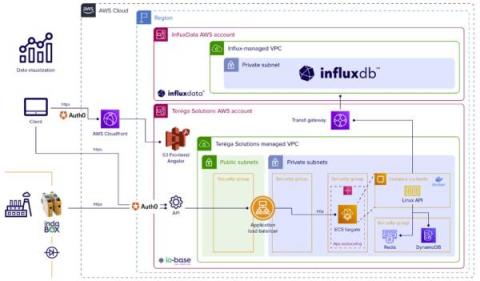
Teréga Replaced Its Legacy Data Historian with InfluxDB, AWS, and IO-Base

Teréga, a gas storage and transportation company in southwest France, manages a network of 5,000 kilometers of natural gas pipelines. The company’s mission is to accelerate the energy transition currently taking place, both at a territorial and a European level. It aims to extend a culture of responsibility to all its business and day-to-day activities.

3 ways to cultivate frictionless banking experiences

In the not-too-distant past, banking relationships could last decades—even lifetimes. But times have changed. Traditional banks face competition from a new breed of disruptors, such as global financial technology firms (fintechs), challenger banks, and neobanks. As in virtually every other industry, customer experience (CX) is now a major factor in the decision to stick with a bank or seek an alternative.

Unveiling Splunk UBA 5.3: Power and Precision in One Package

In the face of an ever-evolving cybersecurity landscape, Splunk never rests. Today, we're ecstatic to share the release of Splunk User Behavior Analytics (UBA) 5.3, delivering power and precision in one package, and pushing the boundaries of what's possible in user and entity behavior analytics.

Canonical Kubernetes 1.28 is now generally available

Following the release of upstream Kubernetes on 15th of August, Canonical Kubernetes 1.28 is generally available in the form of MicroK8s, with Charmed Kubernetes expected to follow shortly. We consistently follow the upstream release cadence to provide our users and customers with the latest improvements and fixes, together with security maintenance and enterprise support for Kubernetes on Ubuntu.

Troubleshooting and Fixing Kubernetes CrashLoopBackOff

In this post, we'll dive into what CrashLoopBackOff actually is and explore the quickest way to fix it. Fasten your seat belts and get ready to ride. Everyone working with Kubernetes will sooner or later see the infamous CrashLoopBackOff in their clusters. No matter how basic or advanced your deployments are and whether you have a tiny dev cluster or an enterprise multi-cloud cluster, it will happen anyway. So, let’s dive into what CrashLoopBackOff actually is and the quickest way to fix it.

Unveiling Komodor's Network Mapping Capability

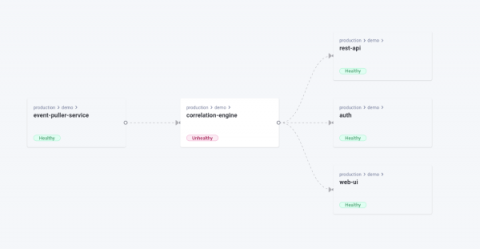
I am happy to share that thanks to the power of the open-source community, and our friends over at Otterize, we have now enhanced our Kubernetes offering for developers with another visual aid to streamline operations and troubleshooting – Dependencies Map. The Otterize network mapper is a zero-config tool that aims to be lightweight and doesn’t require you to adapt anything in your cluster.