Operations | Monitoring | ITSM | DevOps | Cloud

What are Traceroutes and How Do Traceroutes Work?

If you've ever wondered why your Internet connection seems slow or experiencing connection problems with a website, you might have heard of a tool called "traceroute." But what is a traceroute, and how does it work? In this article, we'll be giving a quick and simple introduction to what are traceroutes, and how traceroutes work to help identify and troubleshoot network problems.
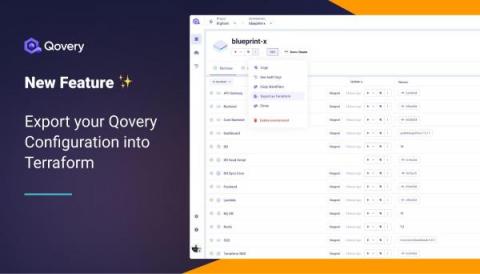

Export Your Qovery Configuration into Terraform Manifest in One Click

At Qovery, we've always prided ourselves on the usability and convenience of our web interface. It's where most of our users begin their journey, configuring and deploying applications with ease and speed. Many users start configuring their applications on our intuitive web interface, validate the successful deployment, and then transition to writing their configurations with the powerful infrastructure-as-code tool, Terraform, utilizing the Qovery Terraform Provider.

Benefits of using AIOps in ITSM

“Necessity is the mother of invention,” so here is a quick backstory to understand what brought AIOps into the ITSM landscape In the fast-paced world of Information Technology Service Management (ITSM), staying ahead of challenges and effectively managing complex systems is crucial. As organizations embrace digital transformation and adopt cutting-edge technologies, the volume of data and incidents generated becomes overwhelming for IT teams to handle manually.

10 Video Shorts to Level Up Your Git Game

Mastering Git can sometimes feel like trying to untangle a bunch of super tangled – and wired (old school, I know) – headphones, not sure exactly where to pull or loop or flip next. Here are 10 Git tutorial videos that’ll help you level up your Git game. These videos are the perfect combination of fast and helpful.

The Quixotic Expedition Into the Vastness of Edge Logs, Part 2: How to Use Cribl Search for Intrusion Detection

For today’s IT and security professionals, threats come in many forms – from external actors attempting to breach your network defenses, to internal threats like rogue employees or insecure configurations. These threats, if left undetected, can lead to serious consequences such as data loss, system downtime, and reputational damage. However, detecting these threats can be challenging, due to the sheer volume and complexity of data generated by today’s IT systems.

Upgrading to Azure Data Lake Gen2: A Seamless Transition

Microsoft’s Azure Data Lake Storage (ADLS) has been a vital component for organizations aiming to build scalable and secure data lakes. As technology evolves, transitioning from Azure Data Lake Storage Gen1 to Gen2 has become increasingly important. This article aims to guide readers through the essential considerations, detailed processes, and best practices involved in making this shift.

What is Docker Swarm and How Does it Work?

For most organizations, having a stable and reliable IT infrastructure is essential for success. But managing multiple servers, databases, and applications can often be difficult and time-consuming. Container orchestration is a standard solution for handling this complexity. Docker Swarm has gained popularity as a container orchestration solution because of its simplicity and scalability.

How using a database monitoring tool helps DBAs create value for the whole organization

As the size and complexity of database estates increases, with more workloads and data being hosted on more platforms, both on-premises and in the cloud, so the appeal of third-party database monitoring tools has also grown. Their ability to provide a holistic view of an entire estate and monitor multiple databases and platforms from a single dashboard has been shown to save DBAs and IT teams many hours of time when compared to home-grown solutions.

IoT Dashboards with Grafana and Prometheus

The Internet of Things (IoT) - is a number of physical devices connected to one network that enables the system to interact with the external world. A great deal of the work surrounding IoT is monitoring, as it’s impossible to react without knowing the situation. For example, we might build a greenhouse system for agriculture that can maintain optimal conditions for growing crops. For this purpose, we need to have sensors picking up information about the temperature and humidity.