As a leader in Security Analytics, we at Elastic are often asked for our recommendations for architectures for long-term data analysis. And more often than not, the concept of Limitless Data is a novel idea. Other security analytics vendors, struggling to support long-term data retention and analysis, are perpetuating a myth that organizations have no option but to deploy a slow and unwieldy data lake (or swamp) to store data for long periods of time. Let’s bust this myth.
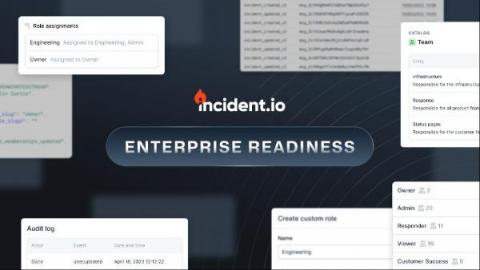
For enterprise businesses, a lot is riding on the efficiency of their incident response. These organizations have large customer bases, complex products, and many incidents. They also have loads of incident responders across various roles, making it difficult to coordinate internally.
Top tips is a weekly column where we highlight what’s trending in the tech world today and list out ways to explore these trends. This week we take a look at the effect of AI-related over-saturation and show you four ways to work around it.
Managing and maintaining a complex IT infrastructure throughout an organization is no small feat. If this is your case, implementing a CMDB (Configuration Management Database) to support your IT Asset Management strategy will make a big difference. In a nutshell, a CMDB is at the core of the ITIL Configuration Management process since it enables you to capture a larger number of Configuration Items (CIs), their interdependencies, and any possible changes they might face.
Out of more than 100 services that Amazon Web Services (AWS) provides, Amazon CloudWatch was one of the earliest services provided by AWS. CloudWatch was announced on May 17th, 2009, and it was the 7th service released after S3, SQS, SimpleDB, EBS, EC2, and EMR. AWS CloudWatch is a suite of tools that encompasses a wide range of cloud resources, including collecting logs and metrics; monitoring; visualization and alerting; and automated action in response to operational health changes.