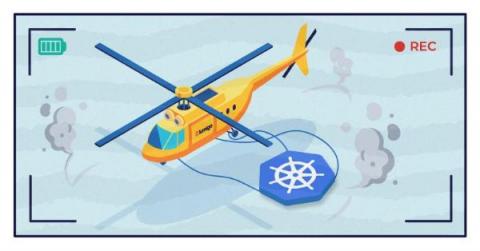
Kubernetes has revolutionized the way we manage and deploy applications, but as with any system, troubleshooting can often be a daunting task. Even with the multitude of features and services provided by Kubernetes, when something goes awry, the complexity can feel like finding a needle in a haystack. This is where Kubernetes Operators and Auto-Tracing come into play, aiming to simplify the troubleshooting process.
Is your organization currently relying on an ELK cluster for log analytics in the cloud? While the ELK stack delivers on its major promises, it isn't the only search and analytics engine - and may not even be your best option for log management. As cloud data volumes grow, ELK monitoring can become too costly and complex to manage. Fast-growing organizations should consider innovative alternatives offering better performance at scale, superior cost economics, reduced complexity and enhanced data access in the cloud.
When you plan monitoring strategies, the first thing you need to consider is the characteristics of the target systems. Depending on the resources you want to monitor, you will have to apply different architectural designs such as data collection, metrics generation, visualization, refresh schedule, and more. When you want to monitor network systems, making these considerations will allow you to achieve the right monitoring solutions.
Deep diving into the 'Normal accident' theory by Charles Perrow, and what it means for SREs.