Operations | Monitoring | ITSM | DevOps | Cloud

New in Grafana 10: A UI to easily configure SAML authentication

In addition to the built-in user authentication that utilizes usernames and passwords, Grafana also provides support for various mechanisms to authenticate users, so you can securely integrate your instance with external identity providers. We are excited to announce that with the release of Grafana 10.0, we have introduced a new user interface that simplifies the configuration of SAML authentication for your Grafana instances.

HTTP Status Codes Uncovered: Your Ultimate Guide

Did you like our previous blog about domain hijacking? Let’s see if you know all the HTTP codes now. There is a complex series of dialogues happening behind the scenes every time you use the internet. Your browser and servers are always communicating — and while most people don’t understand the internet’s language, it’s definitely essential for developers and SEO experts to understand it.

A Deep Dive into the HTTP 999 Status Code

As mentioned in our ultimate guide to HTTP status codes, the HTTP 999 is unofficial, but it still plays an important role in the flow of our online journey in unexpected ways — and here’s why. So what is it for? We all know that the digital highway is held together by something called the Hypertext Transfer Protocol, or HTTP.

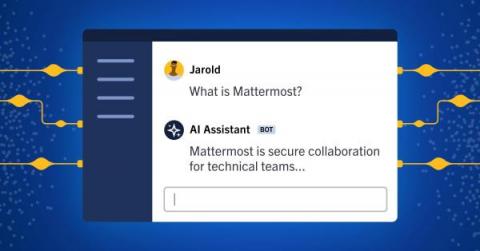
Start using GPT-4 and local models with the open source OpenOps framework

Organizations — particularly those with high security and compliance requirements — need a customizable way to explore and innovate with artificial intelligence and other new technologies. This is why we’re happy to introduce OpenOps, an open source platform designed to help organizations experiment with AI in a secure environment they control. OpenOps is a framework of several tools that enables you to test open source AI models in a sandbox.

How IT Teams Leverage AIOps' Capabilities

This article is the second in a 4-part series on leveraging artificial intelligence for IT operations (AIOps) to provide a more efficient, reliable, agile, cost-effective, and optimized IT infrastructure. If Artificial Intelligence is the ultimate multi-tool for IT operations (as discussed in our first article), then DevOps, Network Ops, Site Reliability Engineers (SREs), and SecOps are the teams using it.

AIOps and Dell's latest acquisition

Dell’s recent acquisition of Moogsoft is the most recent validation of the growing market for automated ITOps – also known as AIOps. When legacy companies such as Dell recognize the importance of AIOps it proves the technologies behind automating ITOps are now mainstream and a vital part of every modern IT management stack. We look forward to seeing how Moogsoft’s integration into Dell will play out over the coming years.

In review: Gartner Hype Cycle for Monitoring and Observability

You know it’s going to be a great day when you find yourself mentioned as a sample vendor on the well-read Gartner’s Hype Cycle report. The OnPage team is thrilled to share with its community that we have been mentioned as a sample vendor by Gartner on their latest Hype Cycle for Monitoring and Observability. Continuing its impressive streak of mentions this year, OnPage is featured as a sample vendor, specifically within the Automated Incident Response category.

Splunk Edge Processor Enhancements Offer Greater Data Access and Improve Data Management

On the heels of an exciting GA in March and the April announcement of its regional expansion, we are excited to share the latest updates to Splunk Edge Processor that will make it even easier for customers to have more flexibility and control over just the data you want, nothing more nothing less.

Four reasons to try our next-gen dashboards

When you need to troubleshoot faster, rich out-of-the-box content lets you easily monitor the tools in your technology stack. Dashboards are key to our customers’ success — offering you deep insights at a glance and the ability to drill into the details most important to you. A couple years ago, we debuted a new style of dashboards, built on top of a scalable, flexible and extensible charting system.