Operations | Monitoring | ITSM | DevOps | Cloud

55 Fascinating DevOps Statistics You NEED To Know In 2023

Today's development and operations teams are intertwined like the strands of a rope. The two heavily depend on each other to form a stronger, more solid unit. Unlike traditional teams that worked in silos, today's developers and operations’ workflows should work like a well-oiled machine. Each component needs to work together to create an efficient system that is greater than the sum of its parts.
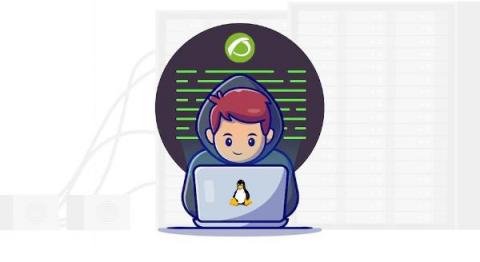
Learn how to monitor Linux computers with Pandora FMS: Full guide

Today, in those much needed training videos, we will delve into the exciting and mysterious universe of basic monitoring of computers with Linux operating systems. Ready to unlock the hidden secrets of your devices? Well, let’s go! Before you dive into this adventure, make sure you have Pandora FMS environment installed and running. Done? Well, now we will focus on how to monitor those Linux computers that allow you to install the software agent devoted to this operating system.

10 Years of Failure Friday at PagerDuty: Fostering Resilience, Learning and Reliability

In today’s fast-paced and ever-evolving world of technology, failure is inevitable. Organizations should embrace failure as a learning opportunity for how to build and deliver more resilient services. At PagerDuty, we’ve practiced Failure Friday for 10 years now. Failure Friday–a practice inspired by the chaos engineering space–involves intentionally injecting failures into our systems to improve reliability and foster a proactive engineering culture.

Lessons learned from integrating OpenAI into a Grafana data source

Interest in generative AI and large language models (LLMs) has exploded in popularity thanks to a slew of announcements and product releases, such as Stable Diffusion, Midjourney, OpenAI’s DALL-E, and ChatGPT. The arrival of ChatGPT in particular was a bellwether moment, especially for developers. For the first time, an LLM was readily available and good enough that even non-technical people could use it to generate prose, re-write emails, and generate code in seconds.

A Look at the Top 7 IT Automations for Highly Effective Organizations

More than three decades have passed since Stephen R. Covey made the world highly effective. His 1989 bestseller, The 7 Habits of Highly Effective People, inspired just about everyone. How could anyone pass up the chance to become highly effective by adopting just seven new habits!?

Application Performance Monitoring vs Application Performance Management: Understanding the Differences

Ensuring optimal application performance is a Herculean task tee’d up for today’s IT operations teams. Adding to the confusion is the shared acronym of the two most common practices: While the terms are similar, the approaches and use cases are different.

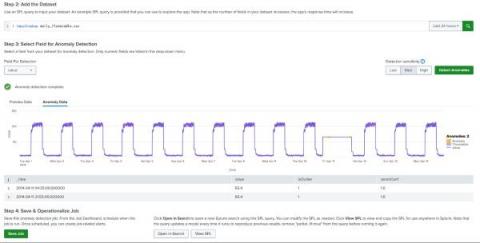
Fastest Time-to-Value Anomaly Detection in Splunk: The Splunk App for Anomaly Detection 1.1.0

Anomaly detection in metrics or time series data is the most used machine learning use case among Splunk Security and Observability customers. Customers are looking for easy-to-use ML-powered high-fidelity anomaly detection, so that they can be alerted at the first sign of a failure point or security incident.

For Better Software Vendor Management, EUC Teams Need Better Data

Software vendor management is difficult. You've probably experienced it. The service desk is flooded with tickets about a specific application. Employees are frustrated. Your EUC team investigates but can’t find the root cause. So, you reach out to the vendor. Then the inevitable happens: the vendor responds with “Everything is green from our perspective”. Yet, the issues persist. Tickets continue to come in. Frustrations continue to mount.

Cloud-Based vs Cloud-Native: What's the difference?

Get to know the differences between cloud-native and cloud-based applications, their benefits, and why a cloud-native tool like Cloudsmith is a game-changer for efficient and secure software artifact management. The term 'cloud' has become a buzzword in the tech industry, often used interchangeably to describe anything from online storage to complex computing services. But what does it really mean? And more importantly, what does it mean for your business?