Operations | Monitoring | ITSM | DevOps | Cloud

Build VS Buy: How to get the most out of your SCOM monitoring

Microsoft's System Center Operations Manager, SCOM, is one of several monitoring platforms available on the market. It is widely adopted and has great potential to help you create a stable and robust IT environment. To succeed with that, however, is not always straightforward. To fully benefit from SCOM, the right resources need to be in place and optimized- time, competence, and money.

Solving specific use cases with CFEngine policy and providing reusable modules

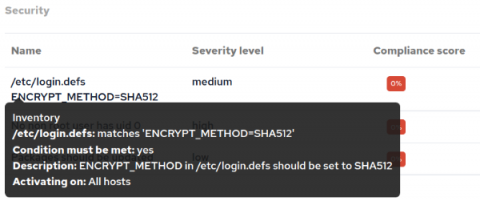
With the release of build.cfengine.com, I have been working to migrate some of our own security related policy into modules of their own. CFEngine Build and the cfbs tooling allows us to organize policy into modules, which are easy to update independently and share with other users. Let’s take the scenic route and look at what life is like with cfbs. One of our security policies requires that the password hashing algorithm in /etc/login.defs is set to SHA512.

Creating a Free Data Lake with Coralogix

Like many cool tools out there, this project started from a request made by a customer of ours. Having recently migrated to our service, this customer had ~30TB of historical logging data. This is a considerable amount of operational data to leave behind when moving from one SaaS platform to another. Unfortunately, most observability solutions are built around the working assumption that data flows are future-facing.

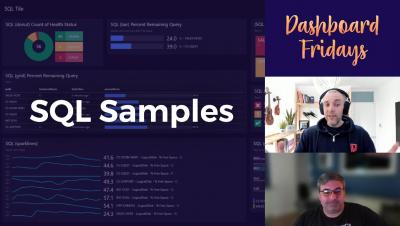
Dashboard Fridays: Example SQL Samples Dashboard

Join SquaredUp's Adam Kinniburgh and fellow virtualisation expert Shawn Williams as they showcase this SQL Sample dashboard. This dashboard was designed to demonstrate how the same base SQL query could be used with each of SquaredUp’s visualizations. Each SQL visualization slightly modifies how the data is presented to target user requirements. Tune in to learn how it was made, the challenges it solves, and Shawn's top tips for building it yourself.

Kubernetes Master Class GitOps and Fleet Multi Cluster CD with EKS, GKE and AKS

GitOps is a relatively new model with a fast adoption rate because of how it enhances the continuous delivery workflow in the Kubernetes context. GitOps requires you to describe and observe systems with declarative configurations that will form the basis of continuous integration, continuous delivery and continuous deployment of your infrastructure. In this session, we will focus on making use of Fleet to manage deployments to multiple downstream clusters at scale.

Cluster Info

The Aiven Cluster startup program offers $100,000 credit to help you build your data infrastructure using Aiven services, and technical expertise to help your startup grow – fast. Aiven Cluster helps you grow your business by taking away all your data infrastructure worries so you can focus on the stuff that really matters – building your dreams.