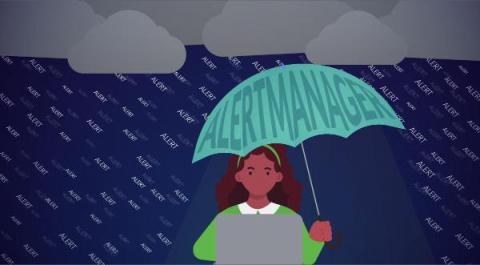
Have you ever fallen asleep to the sounds of your on-call team in a Zoom call? If you’ve had the misfortune to sympathize with this experience, you likely understand the problem of Alert Fatigue firsthand. During an active incident, it can be exhausting to tease the upstream root cause from downstream noise while you’re context switching between your terminal and your alerts. This is where Alertmanager comes in, providing a way to mitigate each of the problems related to Alert Fatigue.
Sysdig Monitor has long integrated with a variety of Notification Channels, allowing users to forward alerts to a multitude of third-party services. Currently, users can choose to forward Sysdig Monitor’s alerting events to external services like PagerDuty, Slack, Email, Microsoft Teams, and many more.
Microsoft Azure Monitor allows customers to get critical details about their Azure cloud environments and services. The API for Azure Monitor can be a great way for teams to pull this information into their own storage systems for further analysis. However, it can be an overwhelming amount of data to process. Sysdig can help with this problem and eliminate time and effort. Here is how we do it …
These three IAM security misconfiguration scenarios are rather common. Discover how they can be exploited, but also, how easy it is to detect and correct them. Identity and access management (IAM) misconfigurations are one of the most common concerns in cloud security. Over the last few years, we have seen how these security holes put organizations at increased risk of experiencing serious attacks on their Cloud accounts.
As companies start their Kubernetes and cloud-native journey, cloud infrastructures and services grow at a rapid pace. This happens all too often as organizations shift left without thorough controls, which can lead to overallocating and overspending on their Kubernetes environments. Organizations running workloads in the cloud can put budgets at risk when they lack information about key facts.
When it comes to creating new Pods from a ReplicationController or ReplicaSet, ServiceAccounts for namespaces, or even new EndPoints for a Service, kube-controller-manager is the one responsible for carrying out these tasks. Monitoring the Kubernetes controller manager is fundamental to ensure the proper operation of your Kubernetes cluster. If you are in your cloud-native journey, running your workloads on top of Kubernetes, don’t miss the kube-controller-manager observability.
Kubernetes is a continuously evolving technology strongly supported by the open source community. In the last What’s new in Kubernetes 1.25, we mentioned the latest features that have been integrated. Among these, one may have great potential in future containerized environments because it can provide interesting forensics capabilities and container checkpointing.
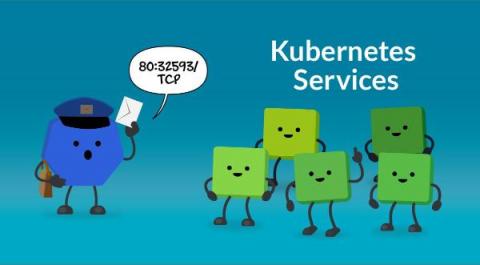
Pods are ephemeral. And they are meant to be. They can be seamlessly destroyed and replaced if using a Deployment. Or they can be scaled at some point when using Horizontal Pod Autoscaling (HPA). This means we can’t rely on the Pod IP address to connect with applications running in our containers internally or externally, as the Pod might not be there in the future.