Operations | Monitoring | ITSM | DevOps | Cloud

The latest News and Information on Containers, Kubernetes, Docker and related technologies.

Civo January 2023 Newsletter

With less than one month to go, we are counting the days until our first Civo Navigate event in Tampa Bay, Florida. Mark Boost, CEO of Civo, recently explored the motivation behind Civo Navigate, what attendees can expect, and the industry reaction in our blog. If you're joining us for the event, why not check out the Synapse Florida Summit? You can use code "CIVO" to get a 10% discount on all Synapse Summit tickets here.

Simplifying Kubernetes DevSecOps Through Platform Engineering

DevSecOps–short for development, security, and operations–is a trending practice that introduces security testing, triage, and risk mitigation as early as possible in the software development lifecycle, rather than bolting on security in the final stages. DevSecOps requires a shift (also known as “shift-left”) in culture, process, and tools across development, security, and operations teams to make security a shared responsibility.

A Fully Argo-Based Ecosystem For Continuous Delivery and Deployment

Better DevOps makes for more efficient engineering teams and more reliable releases, and when it comes to DevOps, it doesn’t get better than GitOps. According to DevOps-As-A-Service: One of the many goals of DevOps is to reduce Time To Value (TTV) and to provide faster feedback while enabling developers to easily self-service or not have to engage to get a service at all.

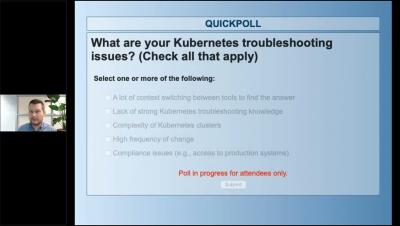
Kubernetes Monitoring: 4 Data Types to Increase Insights

Having a deep understanding of a Kubernetes cluster is important: the right insights allow you to monitor the performance and health of the cluster, which is necessary for ensuring that applications are running smoothly and that any potential issues can be identified and addressed quickly. As your Kubernetes cluster develops, so does the need for monitoring and troubleshooting.

How to Deploy a D2iQ Kubernetes Platform Cluster Using ClusterAPI

This video will demonstrate how CAPI is used as part of the D2iQ Kubernetes Platform (DKP) installation, while deploying a DKP cluster. By simplifying Kubernetes deployment and management, DKP enables your organization to gain all the benefits of cloud-native Kubernetes while establishing a future-proof foundation for smart cloud-native innovation.

Multi-Cluster Lifecycle Management With DKP and ClusterAPI (CAPI)

This video will demonstrate how a D2iQ Kubernetes Platform (DKP) management cluster can be used to deploy new DKP clusters. In addition, we will also demonstrate how to attach an existing DKP cluster to a DKP management cluster, and put it under the management cluster's control, and how to detach and delete clusters under management control.