Operations | Monitoring | ITSM | DevOps | Cloud

The Power of Harnessing DevOps for the Database

Why do some organizations excel in streamlining their database operations and applications development while others find it immensely challenging? Why can some database teams embrace agility while others take months of cycles to deploy even a single line of code? What secret sauce can allow some database teams to work smarter (not harder), streamline database development lifecycles better, get to deployment faster, and create an overall stronger alignment across departments?

3 questions to ask in the build vs buy debate for incident response tooling

As a former incident responder and now as a responder advocate for FireHydrant, I’ve seen the “build vs. buy” debate play out many times. In fact, I even supported the tool that former employers used for managing incidents for years before they decided to buy (more on that in a future blog post).

How Is Uptime Calculated?

Any modern organization depends heavily on the health of its network and servers. If a server goes down, it can seriously impact a business’s ability to provide services for clients and customers to get work done. If network admins don’t know a server went down, the problem could quickly worsen. No one may realize there is a problem until the support lines are loaded with calls, and everyone needs to scramble first to find the issue and then fix it.

Webinar: Real talk: automation for ITOps

IT operations move fast. If you’re an ITOps leader, you need to be moving just as fast to make sure your team has what it needs. Positioning your team for success isn’t easy: complexity in IT is increasing every year and can reach a point where it exceeds a person’s capacity to keep pace. In the face of massive growth, ITOps teams can face major challenges with productivity, burnout and efficiency.

What Is the State of IT Automation Going into 2023?

History will look back on this period of the 21st century as a pioneering, resilient, and excitingly disruptive time. We’re deep into a dynamic era as the cloud, Artificial Intelligence (AI), IT automation, and digital transformation converge to drive challenges and dazzling opportunities. The sheer force and potential of AI—coupled with unprecedented security risks and ongoing infrastructure advances will shape enterprises for years to come.

Create AWS Cloudwatch metric alerts with Lumigo

Amazon CloudWatch monitors metrics of your Amazon Web Services (AWS) resources in real time and can trigger alarms when a metric goes above or below certain thresholds. Typically, Amazon CloudWatch sends out alarms by posting a message to an SNS (Amazon Simple Notification Service) topic, which distributes the message via several mediums, including email, SMS, and Lambda functions. Setting a CloudWatch alarm can be complex.

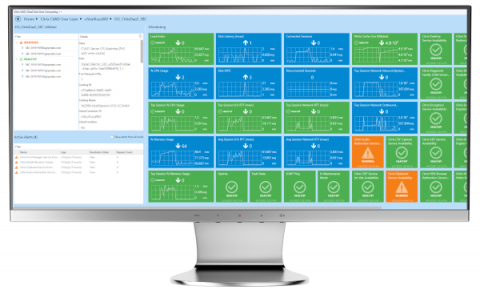
Top 5 reasons to monitor Citrix PVS with GripMatix PVS SCOM Management Pack

GripMatix SCOM Management Pack solution for monitoring Citrix Virtual Apps and Desktops and Citrix DaaS, MetrixInsight for Citrix VAD/DaaS, includes comprehensive monitoring for Citrix Provisioning Service, also known as Citrix PVS. Check out our top 5 reasons to monitor this advanced Citrix software-streaming technology with GripMatix PVS SCOM Management Pack, to increase your Business Continuity and Performance.

8 Change Management Best Practices You're Probably Not Following

 Change management methodologies are often seen as complex and clunky, which can lead to these initiatives having a high failure rate in many organizations—but why does change management have this stigma? At one point in my career, I was a regular at change advisory board (CAB) meetings and maintained our organization’s standard change catalog.

How to build your DevOps team with Agile culture

DevOps is the modern convergence of people, processes and tools to create a continuous software delivery stream. Much like the code it produces, the concept of DevOps itself is continuously adapting to encompass new ideas, methods, and technologies. So what can we expect from the DevOps cultural shift in the future? The delivery stream of yesterday was a segmented process, often separating key teams and concepts into silos where people focused on their individual tasks.