Operations | Monitoring | ITSM | DevOps | Cloud

Securing Productivity in Supply Chains

Mobile device management – it’s been part of your operational technology portfolio for a long time. You’ve been using it for years – or maybe decades – to stage device configurations, push software updates and more. You might be using our Ivanti Avalanche MDM solution to manage your rugged mobile deployments. The device, OS and app management capabilities remain at the center of your mobility management program, and that isn’t going to change.
What is hybrid cloud?

Hybrid cloud has become a popular computing model in recent times. Find out all you need to know, including its features, pros and cons As computing needs evolve, enterprises continuously find it difficult to scale their business offerings on private or on-premises computing environments. That’s why there are third-party or public cloud providers to enable businesses to carry out larger computational workloads.

Sponsored Post

Network automation tools and their importance in today's networks

A network, as we all know, is the linking of two or more devices for resource sharing, file exchanging, or electronic communication. In a huge network organization consisting of more than 10,000 devices, managing every device manually is a hectic task and near impossible for network admins. To overcome this challenge, a software-based feature known as network automation was invented. The main purpose of network automation is to automate tasks and reduce both the workload and human errors. This automation works through a network automation tool.

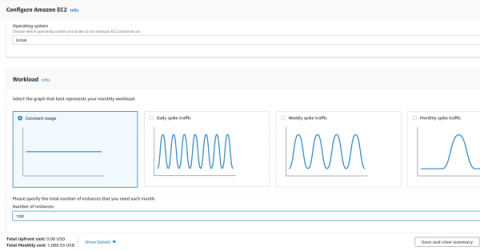
Understanding AWS pricing

You launch a startup or a new project in your organisation. You decide to use Amazon Web Services (AWS) as your primary cloud platform. You estimate costs based on listed prices, and rest assured that your startup/project will meet its budget. And then, suddenly, at the end of the month, you receive an invoice from AWS for an amount two times higher than you originally expected.

Elektrobit partners with Canonical to pave the way to a new era of software-defined vehicles

ERLANGEN, Germany, October 27, 2022 – Elektrobit and Canonical today announced a partnership to bring the benefits of Canonical’s Ubuntu operating system to automotive software. As the industry transitions towards software-defined vehicles, the new partnership will make it easier than ever before for car makers, suppliers, and developers to create the next generation of vehicle applications, while meeting stringent automotive standards.

Picking the right developer workflow tools for your team

The software development life cycle is by no means a short or easy process. From project design to post-production monitoring, each stage of the life cycle comes with its own set of workflow-related demands. Teams must develop adaptable yet agile workflows to prioritize efficiency while simultaneously ensuring a positive developer experience. Thankfully, there is no shortage of tools to boost productivity in software development team workflows.

AIOps Rightfully Going Beyond CMDB in the Multi-Cloud Era

The absence of topology can be a key inhibitor for AIOps tools, creating blind spots for AIOps as they only have access to event data. A topology, an IT service model, or a dependency map is a real-time picture of tools and services that are connected and dependent on each other to deliver an IT service. Suppose an application is driven by cloud-native technology, connected with any kind of ephemeral systems (containers and microservices), and relies on storage, database, and a load balancing tool.

Do We Still Need the Change Advisory Board? 15+ Industry Leaders Weigh In

If you're already versed in the changes to the traditional IT service management (ITSM) best practices that came with ITIL 4, you'll know that change management is now called change enablement, and there's minimal mention of the Change Advisory Board (CAB). But what does this mean for your IT organization? Do we still need the Change Advisory Board? Should we drop the CAB (if we had one)? Should we ignore ITIL 4's new change enablement guidance?

Observability vs. Monitoring: What is the Difference?

For several decades, IT monitoring has been deployed in different forms. The focus of IT monitoring has been to gather metrics about the operations of an IT infrastructure’s hardware and software assets to ensure that all the key functions are being performed as expected to support applications and IT services. In the recent past, the term Observability has been used as a synonym for “modern monitoring”.