

|
By Rajkumar Singh
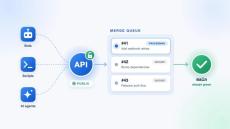
Merge Queues help keep your busy branches stable by testing how changes work together before they’re merged. Today, we’re introducing public APIs for Merge Queues, available to all Standard and Premium workspaces in Bitbucket Cloud. The new APIs let your tools use the existing merge endpoint to queue pull requests, track their progress and respond to the outcome.

|
By Rajkumar Singh
Flaky tests stall pull requests. Slow tests drag out builds. Outdated tests add maintenance work that’s easy to put off. To help optimize your test suite, we’re adding two new agents in Bitbucket, Test Optimizer and Test Cleanup and an improved Flaky Test Fixer. With these agents, your team will spend less time babysitting tests and more time shipping.

|
By Arthy Vijayaraghavan
Engineers write tests for the logic that worries them and let the small details slide. One of our commerce engineering teams now has a scheduled agent that finds the thinly tested files, writes the missing tests, and opens a pull request for review. Nobody decides to skip a unit test. The core logic gets covered, the small details don’t make the cut, and most days that’s a fair trade.

|
By Hamreet Kaur
Developers use Bitbucket Cloud every day to turn plans into working software. Code lives in repositories, feedback happens in pull requests, and Bitbucket Pipelines helps teams validate changes before they move forward. For an AI assistant to help with this work, it needs access to the same information. Without a direct connection, developers have to gather pull request details, pipeline results, logs, and links before the assistant can help.

|
By Arthy Vijayaraghavan
Last quarter, our AI reviewer told a developer who was fixing a CSS bug to rethink how their component fetched data. The comment was well written and confidently worded. It was also about code they hadn’t touched. That’s what tends to happen when you hand an agent every team’s review guidelines at once.

|
By Arthy Vijayaraghavan
The hard part of a feature flag is rarely adding it. It is remembering to remove it months later, when the rollout is over, the original context has faded, and there is always a more urgent piece of work waiting. Since April 2026, one Atlassian team has used Agentic Pipelines to clean up their monthly backlog of stale feature flags. The workflow prepares the change and opens a pull request, while engineers still review and merge the pull request.

|
By Sanchi Gupta
Finding code across your repositories in Bitbucket just got a major upgrade. We’ve rolled out code search in open beta for Bitbucket Cloud: a faster, more integrated search experience built to help you find code across your workspace without interrupting your workflow. For many developers, search is one of the fastest ways to explore an unfamiliar codebase, investigate an incident, audit API usage, or scope a refactor.

|
By Edmund Munday
AI agents can help investigate failed builds, fix flaky tests and automate other development tasks. But setting up those agents has required more Pipelines configuration than it should. Agent-powered steps often need different compute, permissions and runtime settings from ordinary build and test steps. Until now, teams have either repeated those settings across every agent-powered step or tried to make one set of global defaults work for everything.

|
By Rajkumar Singh
When a team relies on automated tests in CI/CD, knowing that tests ran is only the beginning. Understanding whether the suite is healthy, which tests need attention, and how a specific test has behaved over time — that’s what drives action. Bitbucket Tests is evolving to make those answers easier to find and give you tools to improve your test health.

|
By Arthy Vijayaraghavan
Routine vulnerability fixes are rarely difficult in isolation. The interruption that they cause is the problem: pick up the ticket, trace the dependency, update the package or image, regenerate files, run the checks, open the pull request, then return after deployment to close the loop. That repeated handoff was a good candidate for automation with agentic pipelines. The goal was simple: start the day with a tested pull request instead of another ticket to pick up.

|
By Atlassian
About Atlassian: Behind every great human achievement, there is a team. From medicine and space travel to disaster response and pizza deliveries, we help teams all over the planet advance humanity through the power of software. Our mission is to help unleash the potential of every team.

|
By Atlassian
Introducing the all-new Loom Desktop app for Mac. About Atlassian: Behind every great human achievement, there is a team. From medicine and space travel to disaster response and pizza deliveries, we help teams all over the planet advance humanity through the power of software. Our mission is to help unleash the potential of every team.

|
By Atlassian
Ever had a broken test stop your flow? In this Bitbucket Blitz video, we look at how to setup self-healing pipelines using Bitbucket and Bitbucket Agentic Pipelines. Instead of just failing and waiting for a human, the pipeline triggers an agent when a build or test breaks on a feature branch. The agent reads the logs, finds the root cause in the source code, creates a fix branch, and opens a pull request ready for review.

|
By Atlassian
Tired of spreadsheet trackers, lost Slack requests, and SaaS sprawl? Learn how to turn your existing Atlassian stack—Jira, Confluence, and Jira Service Management—into a unified HR hub for recruiting, zero-touch onboarding, and compliance. Most companies run on Atlassian, but HR workflows often remain scattered across spreadsheets, endless email threads, and disconnected SaaS tools. The answer isn't another point solution or a costly rip-and-replace—it's connecting the systems you already have.

|
By Atlassian
Dave Killeen will tell you, on record, that his relationship with AI has crossed into unhealthy territory. He also says he has never felt more alive, that he is 50 and feels 30, and that he sometimes waits for his two small children to go to bed so he can start a coding session. In between, he gives Axel Sooriah the most practical answer on this show yet to the question every product team is facing: your exec says "we need AI," and you have no idea what they actually want.

|
By Atlassian
Jira Planner is an AI planning agent in Jira that turns high-level product requirements into ready-to-build plans (requirements, technical specs, and Jira work items) grounded in your actual codebase, architecture, and Confluence context. In this video, you'll see how Jira Planner brings due diligence to the pre-build phase, so engineers and AI coding agents start from a plan that reflects the real code instead of a vague prompt. It's useful for product managers, engineering leads, and developers who want to cut the rework that comes from AI guessing at requirements.
|
By Atlassian
Enterprise AI is only useful when it actually runs in production, inside the tools teams already depend on. Getting there is harder than it sounds. Forward Deployed Engineers at Atlassian work directly inside some of the world's largest organizations, building AI-powered agents, connectors, and workflows on Atlassian's platform. They work alongside customers to understand the real constraints, design solutions that hold up at scale, and see them through to deployment.

|
By Atlassian
In the Startup Stories with Atlassian series, we interview founders about their entrepreneurial journey, learn about the problems they are trying to solve, and explore how their teams are using Atlassian tools to grow and deliver value to their customers. In this episode of Startup Stories with Atlassian, Adam sits down with Stan Suchkov, Founder and CEO of Evolve, to explore why pivoting isn't the failure most founders fear – and why the best founders do it deliberately, quickly, and without losing their team in the process.

|
By Atlassian
Most CI/CD pipelines are fragile bash scripts that break when things change. What if your pipeline could think? Agentic Pipelines lets you add AI agents as steps in Bitbucket Pipelines. In this video, I show an agent that reads a design spec from Confluence, generates frontend code, runs tests, and opens a PR, all inside a pipeline. With Agentic Pipelines, Bitbucket goes from a CI/CD platform to a full workflow and automation engine you can use far beyond builds and deploys.

|
By Atlassian
Customer interviews are one of the most powerful ways to build better products — but they’re also time-consuming. In this video, Avinoam “Avi” Zelenko, Principal Product Manager at Atlassian, shares how he transformed the way he runs customer interviews using AI automation and Rovo agents. What used to take hours of coordination, note-taking, and manual summaries now happens automatically. By stitching together the Teamwork Collection and Slack, Avi built a workflow that captures conversations, summarizes insights, and shares them across teams in real time.
- October 2026 (10)
- September 2026 (7)
- August 2026 (2)
- July 2026 (5)
- June 2026 (13)
- May 2026 (6)
- April 2026 (10)
- March 2026 (2)
- February 2026 (1)
- January 2026 (2)
- December 2025 (7)
- November 2025 (4)
- October 2025 (5)
- September 2025 (3)
- August 2025 (4)
- July 2025 (4)
- June 2025 (3)
- May 2025 (1)
- April 2025 (5)
- March 2025 (2)
- February 2025 (2)
- January 2025 (2)
- December 2024 (1)
- November 2024 (4)
- October 2024 (2)
- September 2024 (3)
- June 2024 (4)
- May 2024 (3)
- April 2024 (7)
- March 2024 (6)
- February 2024 (7)
- January 2024 (5)
- December 2023 (6)
- November 2023 (3)
- October 2023 (3)
- September 2023 (3)
- August 2023 (3)
- July 2023 (3)
- June 2023 (3)
- May 2023 (5)
- April 2023 (1)
- March 2023 (2)
- February 2023 (5)
- January 2023 (4)
- December 2022 (4)
- November 2022 (4)
- October 2022 (4)
- September 2022 (2)
- August 2022 (10)
- July 2022 (25)
- May 2022 (3)
- April 2022 (4)
- March 2022 (1)
- February 2022 (2)
- January 2022 (4)
- December 2021 (7)
- November 2021 (7)
- October 2021 (4)
- September 2021 (9)
- August 2021 (4)
- July 2021 (6)
- June 2021 (9)
- May 2021 (6)
- April 2021 (9)
- March 2021 (8)
- February 2021 (10)
- January 2021 (7)
- December 2020 (7)
- November 2020 (9)
- October 2020 (8)
- September 2020 (6)
- August 2020 (9)
- July 2020 (6)
- June 2020 (7)
- May 2020 (9)
- April 2020 (9)
- March 2020 (10)
- February 2020 (5)
- January 2020 (7)
- December 2019 (9)
- November 2019 (5)
- October 2019 (8)
- September 2019 (10)
- August 2019 (11)
- July 2019 (9)
- June 2019 (2)
- May 2019 (9)
- April 2019 (16)
- March 2019 (6)
- February 2019 (11)
- January 2019 (12)
- December 2018 (10)
- November 2018 (14)
- October 2018 (5)
- September 2018 (18)
- August 2018 (1)
- July 2018 (3)
- June 2018 (4)
- April 2018 (2)
- March 2018 (2)
- February 2018 (2)
- January 2018 (2)
- December 2017 (1)
- October 2017 (3)
- September 2017 (1)
Tools for teams, from startup to enterprise. Atlassian provides the tools to help every team unleash their full potential.
Atlassian is a leading provider of collaboration, development, and issue tracking software for teams. With over 100,000 global customers (including 85 of the Fortune 100), we’re advancing the power of collaboration with products including Jira, Jira Service Desk, Jira Ops, Confluence, Hipchat, Bitbucket, Trello, OpsGenie, and more. Driven by honest values, an amazing culture, and consistent revenue growth, we’re out to unleash the potential of every team.