Operations | Monitoring | ITSM | DevOps | Cloud

The latest News and Information on APIs, Mobile, AI, Machine Learning, IoT, Open Source and more!

Trace an AI SRE Agent: AURA Docker Quickstart with Phoenix and OTel

You get an answer from the agent and no way to check how it got there. The route it took is recorded, and so is the reason it gave for taking it. AURA emits OpenTelemetry spans, and the Docker quickstart wires them straight into Phoenix. Four services come up together: AURA Web Server as the persistent agent harness, LibreChat as a browser interface for chatting with the agent, Phoenix to receive the spans, and MongoDB to store stateful data for LibreChat. The Compose file arrives pre-configured to point AURA at Phoenix and to enable content recording for the local demo.

Building Quality and Compliance Systems That Hold Up to an FDA Inspection

For any company operating in an FDA-regulated industry, the inspection is the moment of truth. It is when the quality and compliance systems a company has built, or failed to build, are examined by investigators trained to find exactly the gaps a company hopes it does not have. A successful inspection reflects systems that were designed to withstand scrutiny; a difficult one, with findings and follow-up, reflects systems that were not. The difference is rarely luck. It comes down to whether a company has built genuine, robust quality and compliance systems well before an inspector ever arrives.

Why Organisations Emulate Legacy Systems Instead of Rewriting Them

There is a persistent assumption in technology that old systems should be replaced. Legacy is treated as a synonym for obsolete, and the instinctive response to an ageing system is to rewrite it in something modern. Yet across industry after industry, organisations running critical legacy systems repeatedly choose a different path: rather than rewriting, they emulate. Understanding why reveals a great deal about how risk, cost, and continuity actually weigh against the appeal of a clean rewrite, and why emulation is so often the wiser engineering decision.

What Tech Founders Need to Know Before Dissolving Their Company

Shutting down a startup is one of the hardest decisions a founder can make. After months or years of building something from nothing, closing the doors feels like admitting defeat. But the truth is, knowing when and how to dissolve a company the right way is just as important as knowing how to start one. If you are a tech founder in California thinking about winding down your business, understanding how to dissolve an LLC in California properly can save you from legal headaches, unexpected taxes, and personal liability long after the company is gone.

The role of AI in website monitoring : How AI is rewriting the rules of website monitoring

A peak sale season, missed transaction or availability issues, spiking customer tickets, and unhappy customers. Well, you know the trope. A few years ago, this was just part of doing business online. Today, it’s a problem you can avoid, thanks to artificial intelligence. We’ve quietly reached an important turning point in website monitoring. For most of the internet’s history, monitoring meant setting thresholds: set a number, wait for it to be crossed, get an alert, and fix the issue.

When to Use Grafana Assistant vs. MCP vs. gcx: Part 3

When should you use gcx? If Grafana Assistant is the brain and Grafana MCP is the easy hand, gcx is the power hand. Built for AI agents working in the terminal, gcx gives them deep access across Grafana Cloud—so they can pull telemetry, verify code, automate workflows, and access places MCP doesn’t. Coding agents? gcx. Need the full Grafana Cloud surface? gcx. Automating in CI/CD? gcx. Here’s where it fits, and when to use it — explained by Nicole van der Hoeven.

Recurring Office Hours with the AI SRE Agent Team Behind AURA

Building an agent and not sure how to approach something? Bring it. AURA office hours are recurring working sessions with the people who build it. The team has been talking to people trying out AURA and hearing the same good questions come up more than once. Office hours are the answer to that: a standing slot on a schedule, rather than one conversation at a time. The format is deliberately loose. Nobody is arriving with thirty slides to spend an hour talking at you. The session goes wherever the questions go.

AI cost governance: policies to control AI spend

AI cost governance is the set of policies and controls that keep AI spend predictable and attributable: budget caps and token quotas set before deployment, prompt caching to cut repeat token costs, hard limits on reasoning steps and tool calls, and unified allocation so every dollar maps to a team, feature, or customer. Governance fails when it's advisory. It works when the caps are enforced in the platform and someone owns the number.

AI finds vulnerabilities faster than you can fix them

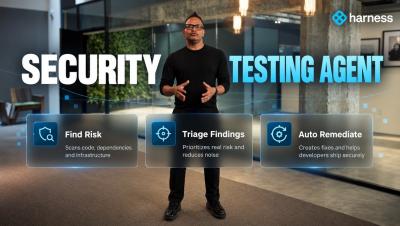
If an AI model can find a vulnerability for an attacker, the same model should help a defender fix it. In practice, the math doesn't favor the defender. This quick video digs into the real asymmetry AI-powered vulnerability discovery creates: The goal is models acting as tools for defenders, not weapons for attackers. Getting there means rethinking how much ground your team can realistically cover on its own.