








Berlin, Germany
2017
  |  By Edvinas Janusevicius
Monitoring load is not always steady. A team might add a new batch of checks or run several ad hoc tests during a rollout. When that happens, your Private Location agents need to pick up more work at once. If there aren’t enough agents available during a burst, checks start piling up in the queue, which can delay or disrupt check execution. But solving this by running a high number of agents around the clock has the opposite problem: most of that capacity sits idle until the next busy period.
  |  By Stefan Judis
You get an infrastructure alert. Something's off, so you task your agent to investigate, and it ends up grepping through the logs. You both wonder if there's customer impact. There’s a simple rule: AI agents in the incident loop are only as good as the signal you feed them. And logs alone aren't a great signal.
  |  By Stefan Judis
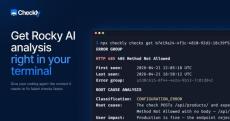
A Playwright Check fails at 2 am. The login flow is broken. Until today, that alert triggered a human to get up, open the Checkly dashboard, copy Rocky AI root cause analysis (RCA), and then tell an agent to get to work. There were two AI agents, one incident, and no way for them to talk to each other. The extended checkly checks and new checkly rca CLI commands close that gap. Your coding agent can now pull Rocky AI's analysis into its ongoing work, read the diagnosis, and go fix the code.
  |  By Vince Graics
This is a guest post by Vince Graics, Staff QA Engineer at World of Books. If you're running a Shopify storefront and want reliable synthetic monitoring, you'll hit a wall. Shopify's bot detection doesn't care that your headless browser is friendly; it sees datacenter IPs and acts accordingly. Cart API calls get hit with 429 rate limits, Cloudflare challenge pages pop up mid-check, and you're left wondering whether the bug is in your code or in the platform fighting you.
  |  By Pırıl Kavlak
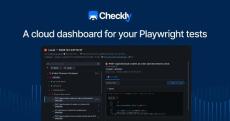
The Checkly Playwright Reporter is an npm package that sends the results of npx playwright test to Checkly as a cloud test session, including traces, screenshots, videos, and full debugging context. Run your Playwright suite in CI or locally, and every result gets a persistent, shareable home in Checkly with AI-powered analysis, richer trace-derived views, and a direct path to production monitoring. It does not replace Playwright. It makes the output of Playwright much easier to work with.
  |  By Hannes Lenke
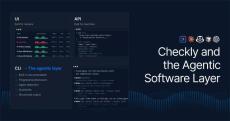
November 24th, the Opus 4.5 release turned around the entire tech industry. This was the moment when agents became capable. Capable enough to write solid staff-level code. Capable enough to reason about alerts, investigate root causes much faster than most engineers, and set up the reliability layer faster. For me, this feels like an iPhone moment on steroids; the adoption of AI is accelerating much faster than any adoption curve I’ve seen over the past few decades.
  |  By Stefan Judis
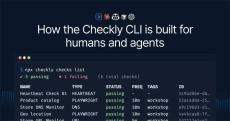
Half of the Checkly CLI users are already coding agents. This is not a prediction — it's what the data shows today. Since February, more and more agents have been using the CLI to manage and configure their Checkly monitoring setups. Right now, we're at 50% human and 50% agentic CLI users. And we predict that by the end of 2026, it won't be humans using the CLI; the agents will have taken over. The terminal became the primary interface for AI agents doing real work in the Checkly ecosystem.
  |  By Susa Tünker
When we started building Checkly's uptime monitoring suite, the goal was to give engineering teams complete visibility across every layer of their stack, from application down to network, in one place. URL, TCP, DNS, and Heartbeat monitors covered a lot of that ground. But one fundamental piece was missing: the ability to simply ping a host and know if it's reachable.
  |  By Dan Giordano
After months of being available in Beta for our app users, Rocky AI is now generally available to all users and plans. Rocky AI is Checkly’s AI agent that works around the clock, 24/7, to make sure your application’s reliability is optimal. In this first release, Rocky AI ships with the ability to run continual Analysis on test and check failures, giving your teams AI-powered root cause analysis, impact analysis, and more.
  |  By Tim Nolet
Rocky AI — Checkly’s AI agent — is now Generally Available. We developed Rocky AI over the last ~6 to 8 months. This is an aeon in AI-years. During this period, we learned a ton. About AI, but mostly about how to fit them into an existing SaaS product, not just another chat widget. This is my ramble…
  |  By Checkly
Your UI changes, but your monitoring shouldn't break. Checkly's new agentic checks test the outcome you care about instead of running hard-coded steps. The main question is, "Can a user still do X?".
  |  By Checkly
We at Checkly shipped a major CLI v8 release. Here's everything new, and why it's built for your agent. The CLI v8 expands Monitoring as Code and streamlines your everyday workflows: Upgrade and try it: npm install checkly@latest Chapters.
  |  By Checkly
The new checkly api command is an authenticated pass-through to all 100+ Checkly API endpoints. Give it a path, and it handles your token and base URL. Full API coverage for your agents, no wrappers required.
  |  By Checkly
Alerts tell you something broke, but not why. So you're stuck digging through logs and trace IDs. Checkly monitors your app from the outside, like a real user. And Rocky, the Checkly agent, automatically pulls the right context to provide a root cause analysis for any failed check.
  |  By Checkly
Your Playwright tests catch bugs. The hard part is figuring out what actually broke — and sharing that context with your team. This session shows exactly how the Checkly Playwright Reporter solves that: one shared home for all your test runs, AI-powered root cause analysis, and a direct path from failing test to production monitor. María de Antón, PM for Playwright features at Checkly, runs a live demo on a real app with real failures.
  |  By Checkly
Not everything worth monitoring is on the public internet. In this 30-minute hands-on session, Daniel Paulus deploys four Checkly private location agents on AWS EKS with Terraform, then uses a coding agent to scaffold 200 internal checks in seconds — uptime, TCP, DNS, ICMP, and Playwright browser checks against legacy apps that never leave the firewall.
  |  By Checkly
Coding agents are the fastest-growing audience for the Checkly CLI, and we're doubling down on them. In this session, Stefan hands Claude a real e-commerce app, lets it set up monitoring with `npx checkly init`, generate Playwright tests through MCP, and walk an actual alert end-to-end with Rocky AI in the loop.
  |  By Checkly
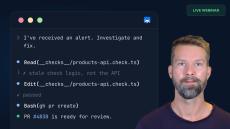
Rocky, Checkly's AI agent, monitors production sites and provides an analysis for every failing check. Previously, a coding agent couldn't access this analysis, leaving incidents and agents disconnected. Now, you can access all the analyses via the Checkly CLI (or API) and tell your coding agent, "Hey, I got a Checkly alert. Please investigate!" With Rocky's structured analysis delivered inline, the coding agent can start with a strong hypothesis, fix issues, and propose a PR in one session.
  |  By Checkly
Learn how the Checkly CLI uses a single function (`detectOperator()`) to detect whether the caller is a human, CI, or a coding agent by checking agent-set environment variables. This detection then changes how commands behave to provide the best agent experience.
  |  By Checkly
Building Agent-Friendly CLIs: Why Your AI Agent Already Loves the Checkly CLI Stefan explains why products, docs, and CLIs must be AI-ready as coding agents rapidly become primary users of the Checkly CLI. He outlines key CLI features for agent workflows: Stefan demos how an agent initializes project-tailored Checkly setup from scratch without any human intervention and also shows how agents can entirely automate the incident life cylce from resolution to status page communication.

Downtime caused by API performance has serious business impact. Use Checkly's deep but easy to use API monitoring solution to check your mobile, webapp or IoT API for performance, uptime and correctness.

Checkly is the easiest way to monitor your API's and Browser click flows from a single dashboard. Use a powerful assertions engine to check all your (mobile) API's for timeliness and correctness. Use javascript to check your most crucial browser transactions. Built specifically for developers and ops teams.

We run your checks from multiple global data centers and alert you when things go south with SMS, Pagerduty etc. Add team mates, call checks from your CI/CD pipeline and publish a status page under a custom domain. We also do SSL expiry checks!

Features at a glance:

  • No more broken APIs: Make sure your API is always responds quickly and with the correct payload. Get started quickly with our Swagger or cURL importer and super easy API monitor creator.
  • No more broken shopping carts: Monitor and validate your most crucial site transactions like logins, shopping carts and onboarding flows. Take screenshots to get instant insights into what's working and what's not.
  • Alerting without limits: Keep your team up to date with a generous helping of SMS messages and unlimited email, Pagerduty, Slack and web hook notifications. Control exactly how, when and how often you get alerted. Of course, "double-checking" is enabled by default to never get false positives.
  • Insights without limits: Doing a root cause without complete and accurate data is insane. But too much detail can also be distracting. That's why next to calculating aggregates to keep an overview, Checkly stores each and every raw result for you and your team to dive into.

A better way to monitor your APIs and site click flows.