

Operations | Monitoring | ITSM | DevOps | Cloud

The latest News and Information on APIs, Mobile, AI, Machine Learning, IoT, Open Source and more!

Building AI SRE Agents, Part 3: Autonomous in the Cloud

Your agent has earned trust in shadow mode. Now it runs on its own: an alert fires, the agent starts, investigates and proposes a fix before anyone opens a laptop. Here is what it takes to make that safe, scalable and better every week. This is the third article in a series on taking an AI SRE agent from a weekend experiment to production. Part 1 built a local, read-only agent on a throwaway cluster and refined it against a synthetic eval set.
How we investigate Sentry errors with an AI agent

We built an AI agent on Qovery to investigate Sentry alerts before our team picks them up. Here’s how the workflow runs, what it delivers, and where engineers still need to step in. Rémi is a staff frontend engineer at Qovery. He writes about frontend architecture, developer experience, and building scalable UI systems for platform engineering tools.

Harness acquires Augment Code to advance the Autonomous SDLC

Harness Cosmos Software Factory Agent automates engineering from idea to code, connecting code context with delivery, security, testing, and production workflows. The world runs on software. Better healthcare, more accessible financial services, more efficient businesses, and better everyday experiences all depend on our ability to build and improve it. AI is making that faster, but the outcome that matters is not simply how much code we generate.

Debug Production at the Speed of AI

Your coding agent can debug production issues now. Yes… Not just “help you debug.” Actually run the investigation… FOR YOU! In this new era of agentic development, speed matters. And in the old days (you know… last week or so) we used to investigate production bugs ourselves. Manually. Like humans. But for a lot of incidents, we don’t need to do all of that anymore.

The Five Levels of the Enterprise AI Software Factory

Scroll LinkedIn for ten minutes and you'd think every engineering organization already runs an autonomous SDLC, with agents writing, reviewing, and shipping code while humans watch. Inside large enterprises, the picture looks different. Coding agents there have to work around sensitive customer data, recurring compliance audits, a larger attack surface, downtime that costs millions, and a CFO who wants to know what last year's token spend bought.

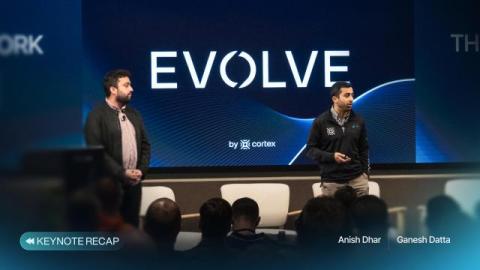
What is Spotify Backstage?

Summary Spotify Backstage is a free, open-source framework for building internal developer portals, with a software catalog, templates, TechDocs, and a large plugin ecosystem. It’s a strong fit if you have a dedicated platform team that wants to build and run its own portal. If you want a current catalog, enforced standards, and org-level reporting without maintaining the infrastructure, a managed platform like Cortex is the better fit.

How to Automate Zoom Meeting Recording in Your SaaS Application

SaaS products that touch Zoom meetings increasingly need a copy of what happened on the call to perform all their functions. Like sales tools logging a demo, hiring platforms capturing an interview, or a customer success tool keeping a record of an onboarding session. None of that exists automatically. Something has to join the meeting, capture it, and hand the result back to your application without anyone clicking record.

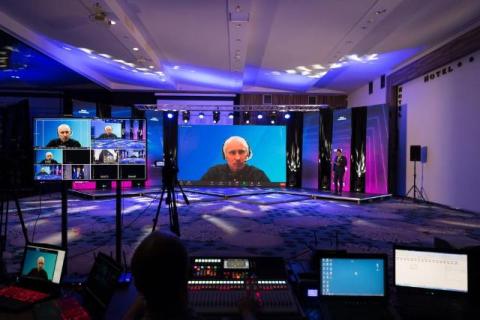
The Infrastructure Puzzle: How AI-Enabled Event Management Software Powers Complex Event Programs

When registration, attendee data, check-in, communications, and reporting stop working in concert, complex programs break. A connected online event management software setup gives teams one operating layer, not yet another stack of tools that complicates work.

Capacity Planning Under Constraints: An Off-Grid Analogy for Edge Deployments

When laptops, mobile hotspots, lighting, portable power stations, and other electronics all need to operate at an off-grid campsite, the question is no longer simply how many devices were packed. It is how much workload a limited pool of resources can support. From a capacity-planning perspective, this makes an off-grid campsite a useful analogy for an edge deployment: power is limited, connectivity is unreliable, physical space is constrained, and every component has to be deployed again on arrival.