Operations | Monitoring | ITSM | DevOps | Cloud

Diagnosing and resolving the 500 internal server error with Apache and Tomcat logs

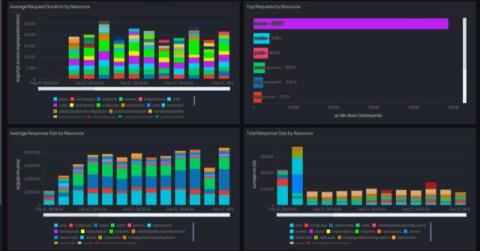
The dreaded 500 internal server error is a common challenge for web administrators, often signaling a disruption in server operations. Diagnosing the root cause requires in-depth visibility into both web server and application behavior. In this blog, we’ll explore how log management tools simplify the diagnosis and resolution of 500 errors by leveraging insights from both Apache and Tomcat logs.

How to leverage AI to enhance network monitoring in retail: A CXO's guide

The retail industry has evolved into a mix of physical stores, e-commerce, digital payments, and omnichannel interactions. Now, GenAI has been added to this mix, which changes how people shop, how retailers operate, and how employees work. While this shift creates opportunities for retailers of all sizes, it also presents serious challenges in maintaining network performance and staying compliant with industry regulations.

Diagnosing ActiveMQ broker performance issues with log analysis

Apache ActiveMQ is a widely used message broker that enables seamless communication between distributed applications. However, as the volume of messages increases, performance bottlenecks can arise, leading to slow message processing, high latency, broker crashes, and out of memory (OOM) errors. One of the most critical issues affecting ActiveMQ is OOM errors, which occur when the broker exceeds its allocated heap memory. This can result in service failures, message loss, and prolonged downtime.

Why a mobile app is the key to better incident communication

While downtime is inevitable, communication should remain swift and transparent. Businesses need a way to relay updates as incidents unfold, ensuring customers, internal teams, and stakeholders stay informed in real time. Relying on emails and web-based updates alone is no longer enough. A mobile-first approach is the solution.

Top reasons why businesses lose trust after acquisition and how you can be smart

Did you wake up to the news that your favorite tool was acquired? You probably got used to the tool's intuitive interface, cost-effectiveness, and feature set, which aligned perfectly with your day-to-day requirements. Your disappointment doesn't end here. It's just the beginning of a series of potential negative consequences of acquisitions.

Managing resource contention in Google App Engine: Best practices for optimal performance

Use case 1: When unexpected traffic surges lead to slower responses A sudden surge in user traffic during a high-demand event causes strain on resources in a cloud-based application running on App Engine. The platform automatically scales instances to handle the increased load, but since compute resources are shared, some instances experience CPU throttling. This leads to slower response times, delayed processing of critical operations, and potential errors that impact user experience. How to resolve it.

SRE Challenges & APM Solutions

Site Reliability Engineers (SREs) face constant challenges as cloud environments and microservices grow more complex. Performance issues often go unnoticed until they escalate, leading to downtime and disruptions. With Site24x7 APM, you can stay ahead of issues before they impact your business. Our Application Performance Monitoring (APM) solution provides real-time insights, predictive analytics, and deep visibility across your entire IT ecosystem—helping you.

Crafting effective cloud architecture diagrams: A comprehensive guide

Cloud architecture diagrams play a crucial role in communication, planning, and execution within the realm of cloud computing. They provide a visual depiction of the infrastructure, highlighting the interconnections between different components and their collaborative functionality. In this guide, we will delve into the five fundamental factors that every cloud architect should consider when crafting a cloud infrastructure.

Simplifying Kubernetes architecture for DevOps

Kubernetes has become the go-to platform for managing containerized applications, but its architecture can seem complex to DevOps teams. Let’s break it down into simple terms and explore how tools like Site24x7 can simplify the process of designing and monitoring Kubernetes architecture.

Challenges in designing AWS architecture

Designing AWS architecture is a complex task. It requires careful planning; a deep understanding of cloud services; and the ability to balance performance, cost, security, and scalability. As organizations migrate to the cloud or expand their existing cloud infrastructure, they often face several challenges that can impact the success of their architecture. Once the architecture is deployed, effective cloud monitoring becomes critical to ensure optimal performance and reliability.