Operations | Monitoring | ITSM | DevOps | Cloud

Troubleshooting website response time latency

Your dashboards may be telling a different story than what the customers are experiencing There's a version of a website problem that nobody talks about enough—the one where everything is technically fine. The site is up. The server is responding. No alerts have fired. And yet, somewhere out there, a user is watching a spinner rotate for the fifth second in a row, quietly losing faith in your product. This is what makes response time latency the most deceptive problem in web operations.

Troubleshooting website connection failures with website monitoring RCA

Every engineer has a story about the outage that came out of nowhere. One moment everything is green. The next, your monitoring dashboard lights up red, your inbox fills faster than you can read it, and somewhere a customer is staring at a blank screen wondering if your business still exists.

What Are DNS Records? DNS explained in simple terms | A complete guide

Learn how DNS (Domain Name System) works and why it's called the internet's phone book. This video breaks down the entire DNS resolution process, from cache checks to root servers, and covers every essential DNS record type, including A, AAAA, CNAME, MX, NS, SOA, TXT, PTR, SRV, and CAA records.

Site24x7 MSP: The all-in-one platform for managed service providers

Managing dozens of client environments you don't own, behind firewalls you can't see through, while keeping SLAs intact is the essential MSP predicament. Site24x7 MSP is a cloud-native platform built to solve it. From a single multi-tenant console, monitor servers, networks, applications, and cloud workloads across AWS, Azure, and GCP with agent-based telemetry that catches issues before they escalate. True data isolation and RBAC keep client accounts secure. White-labeled portals, domains, and agents make it look like your platform. AI-powered self-healing workflows resolve incidents automatically.

From alerts to action: Where reliability is actually won

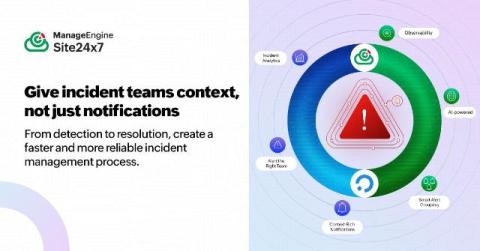
Observability has evolved dramatically in the past decade. The industry has moved from basic uptime checks to full-stack observability (FSO), including metrics, logs, traces, and real user monitoring. Observability tools like ManageEngine FSO can detect anomalies in little time. And yet, outages still last longer than they should. Observability has matured. Response hasn’t. Most IT teams today have the tools to know when something breaks. But knowing is not the same as resolving.
Sponsored Post

Top infrastructure monitoring mistakes (and how to avoid them)

Infrastructure monitoring is meant to simplify operations, not overwhelm teams with noise. Yet the average IT team receives more than 10,000 alerts every day. Despite this constant stream of notifications, critical issues still slip through the cracks. This volume of fragmented data creates a dangerous visibility gap across the infrastructure. As a result, teams can spend more time sorting through alerts than actually resolving issues.

Reduce alert noise with Site24x7's Event Correlation

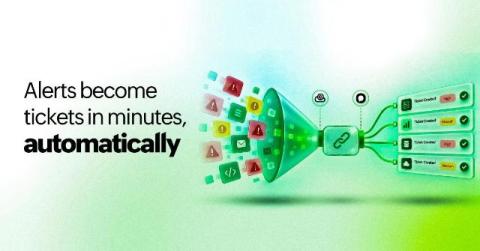
Alert fatigue remains one of the most underestimated problems in IT operations. Srinivasa Raghavan, director of product management, explains how event correlation addresses it. Event correlation is the process of grouping related alerts from across your infrastructure into a single, contextual incident to reduce the volume of noise during an outage or service degradation. In this short clip, Srinivasa walks through what how the feature functions and why high-volume alert environments make this kind of signal-to-noise reduction operationally significant.

Protecting sensitive PII data with effective log management

Organizations rely heavily on logs or tracking changes, troubleshooting issues, and addressing authentication attempts. Although these logs are essential for ensuring a smooth onboarding experience, they often contain users' personally identifiable information (PII), including names, email addresses, phone numbers, and sometimes location or device details. The following sample log illustrates this scenario: 2025-11-01 09:12:33 ACCOUNT_CREATED - New user registered: Name: Michael Scott, Email.

What is Site24x7 Event Correlation? Causal AI and autonomous IT operations explained

When your distributed system goes down, your team spends days sorting through noise. That is revenue walking out the door. In this video, Jasper Paul breaks down the event correlation engine built to eliminate alert fatigue, and accelerate root cause analysis. Most monitoring tools still rely on basic time-window alert grouping — clustering alerts that fire at the same time and calling it correlation. But in a distributed system, outages are never isolated events. And grouping symptoms doesn't find root causes.