We love to write and ship code to help developers bring their ideas and projects to life. That’s why we’re constantly working on improving our product in sync with developer needs to ensure their happiness and accelerate Time To Awesome. This month is special. We have many features that we think you will love when onboarding or continuing to use InfluxDB. We launched Native Data Collectors this month.
The past ten years marked a significant change in how software teams build and deploy applications. We moved away from bulky, slow, monolithic applications toward lightweight, scalable, distributed service-based applications. Meanwhile, tools like Docker, Kubernetes, and other container platforms helped accelerate this process. Despite this sudden growth, a fundamental question remains: what exactly is a service, and how does it fit into a microservice architecture?
When it comes to building reliable and scalable software, few organizations have as much authority and expertise as Google. Their Site Reliability Engineering Handbook, first published in 2016, details their practices to maintain reliability as Google scaled. But when you have over a million servers running thousands of services across more than twenty data centers, how do you monitor them in a consistent, logical, and relevant way?
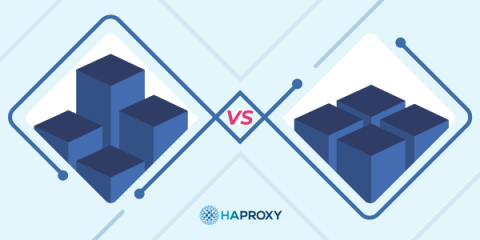
With the right load balancing in place, the demand of increasing web traffic can become manageable, but how do you determine which load balancing algorithm is best suited for your applications? Does the ease of use of static load balancing better suit the services you provide, or would your system benefit from a more complex and dynamic set of algorithms to maximize efficiency? In this blog post, we discuss what to consider when deciding on the right load-balancing algorithm.
“How much Inventory is left for the next batch of production?” Is this easy for you to answer this? If not, then there is a management glitch, which you must take care of. If your organization is still keeping a track of inventory manually it must be a time and money-consuming task. Whereas, if an organization wishes to switch to an automated Inventory Management Software, it makes the task very easy. Let us first know what inventory is & how inventory management helps!
Rich Costello, Senior Research Analyst at IDC has recently developed an Analyst Brief that looks at the growing need for proactive service quality management and optimization tools for communication and collaboration environments. As the world pivoted online during the COVID-19 pandemic, few companies were ready to support a fully virtual workforce that still required constant connection and to remain as productive as possible.
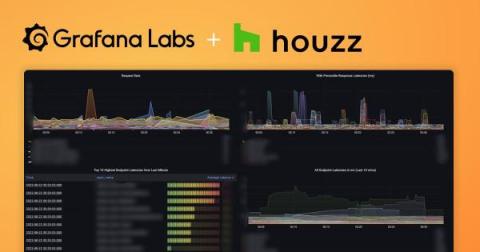
Houzz is where millions of homeowners and home improvement professionals go to seek inspiration and supplies for their remodeling projects. But to continue as the leading platform for home remodeling and design, the Houzz tech stack needed a renovation of its own as the company scaled. In response, the Houzz team began by revamping their monoliths into microservices.