Operations | Monitoring | ITSM | DevOps | Cloud

Putting your MSP customers first means putting your people first too

At N-able, we pride ourselves on creating a world-class culture where people are the center of everything. We know that when we take care of our N-ablites, they will be able to bring their best energy to work every day and focus their time and attention on supporting our customers. This same idea holds true for MSPs—and anyone who wants to create an exciting and desirable culture within their own organization.


What is a Data Warehouse? Benefits and Tips

A data warehouse (DW) is a centralized repository of data integrated from multiple systems.. This data is often cleansed and standardized before being loaded. Designed to support analytical workloads, a data warehouse can help organizations better leverage both current data and historical data to improve decision-making through the analysis of business processes and outcomes.

Logic App Best practices, Tips, and Tricks: #14 Implement good governance policies

Welcome again to another Logic Apps Best practices, Tips, and Tricks. In my previous blog posts, I talked about some of the most essential best practices you should have while working with the Azure Logic App: And some tips and tricks: Today I’m going to speak about another critical Best practice, Tips and Tricks that you need to implement while administrating your cloud integration resources: Implement good governance policies.

Ask Miss O11y: How Can I Convince My Organization to Invest in Instrumenting for Observability?

We recently hosted a Twitter Space, and a question came in regarding speaking to executives about instrumenting for observability. It’s a great topic we love expanding on. Here’s the answer we provided.

Tracing and Observing AWS ECS

It’s no secret that application containerization has revolutionized the digital world as we know it by providing a transient gateway into elastic infrastructure that can scale and grow as needed. Where traditional virtualization was all about creating a single homogenous entity, containers are self-contained units of software, able to run in just about any environment, making them extremely portable.

How to get started with the new Grafana Ansible collection for Grafana Cloud

More than 20,000 companies around the world use Ansible as their Infrastructure as Code and configuration management tool. With the rising popularity towards managing infrastructure using IaC and config management tools, Ansible is one of the best open source tools to choose from. That is why we are excited to announce a new Grafana Ansible collection available to all Grafana Cloud users, including those in the generous free tier.

Continuous performance testing for mobile apps

As of 2021, roughly 5.7 million mobile apps are available in app stores — 2.2 million for iOS and 3.48 million for Android users. Given the massive numbers, customers have a wide variety of choices. With such a high number of apps available, customer satisfaction is paramount, which means avoiding customer churn and retaining users.

How to avoid losing your Slack message history

We understand how critical a message archive can be to your organization. Empowering you with complete control over your data—including your message history—is a key tenet of our mission here at Mattermost! If you’re part of one of the many teams and communities that use Slack to collaborate – take note: After September 1st, 2022, you will no longer be able to access your Slack message history older than 90 days on your free workspaces.

How Observability and AIOps Are Transforming the World

Artificial intelligence for IT operations (AIOps) is the application of artificial intelligence (AI) and associated technologies—like machine learning (ML) and natural language processing—for normal IT operations activities and endeavors. AIOps helps ITOps, DevOps, and site reliability engineer (SRE) teams work better by examining IT information and observability telemetry.

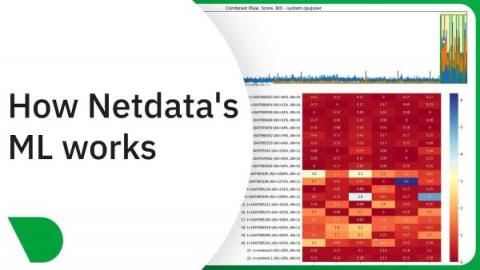
How Netdata's Machine Learning works

Following on from the recent launch of our Anomaly Advisor feature, and in keeping with our approach to machine learning, here is a detailed Python notebook outlining exactly how the machine learning powering the Anomaly Advisor actually works under the hood. Or if you’d rather watch a video walkthrough of the notebook then check out below. Try it for yourself, get started by signing in to Netdata and connecting a node.