

|
By PF Pablo Fernandez
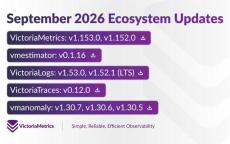
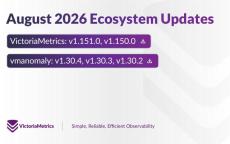
Another month whooshed by, bringing a slew of updates: 3 vmanomaly and 2 VictoriaMetrics releases, and new versions of vmestimator, VictoriaTraces, and our first ever LTS release of VictoriaLogs. This brings 12 months of stability to VictoriaLogs Enterprise users. But the big one was the launch of VictoriaTraces on VictoriaMetrics Cloud. Finally, we can offer a complete managed observability stack with metrics, logs, and traces. We run it, you use it. This ecosystem update includes.
|
By JE Jesús Espino
Imagine this: you are testing the performance of some part of your application. Everything is going smoothly, the numbers look good, and as a last check you turn on Go’s race detector. Then, out of nowhere, it prints a warning you didn’t expect: So you look at it. You look at it again, and again, and you think: “What the…?” The race is between your code and a goroutine you never started, somewhere deep inside net/http. You have no idea how that is possible, or why.
|
By MS Michelle Sebek
I’m not the one whose phone lights up at 3 a.m. when production breaks. But I’ve spent years working alongside the engineers who are, and I’ve noticed that observability migrations happen for two reasons. Either engineering needed one, or, far more often, a quote landed that looked too good to refuse. The engineers rarely regret the first kind. The second kind they tell me about in year two, usually with a renewal notice in hand.
|
By JE Jesús Espino
Most of the time, when we read a file, we do not think much about what happens underneath. You ask for some bytes, you get some bytes. But when getting data off the disk efficiently is at the core of what your application does, what happens underneath starts to matter a great deal, and two identical read() calls can differ enormously in what they cost. So in this post we are going to look at one of the Linux kernel’s optimizations for reading files: readahead.
|
By PF Pablo Fernandez
Earlier this year, we launched VictoriaLogs in VictoriaMetrics Cloud, bringing fast and cost-effective log management to everyone. Today we launch the final major step toward full observability: VictoriaTraces is now available to all cloud users. With this release, you can now manage all three signals, metrics, logs, and traces, in one place with the predictable pricing, reliability, and the operational simplicity you’ve come to expect from VictoriaMetrics.

|
By Michelle Sebek
It’s not the outage, it’s the stretch before you know what actually broke In short: VictoriaMetrics Enterprise support is expertise, not a ticket queue. It’s reactive by design (you reach engineers who know the stack when something breaks), with one proactive service, Monitoring of Monitoring, that watches the health of your VictoriaMetrics observability stack (metrics, logs, and traces).
|
By Pablo Fernandez
August is a month when things typically quiet down. At VictoriaMetrics, however, we kept up the pace. This month saw two VictoriaMetrics releases, vmanomaly updates, a new Tech Talk, and great blog posts from the VictoriaMetrics team you might have missed.
|
By Michelle Sebek
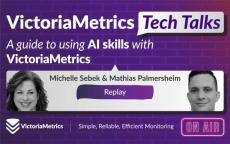
Tech Talks went dark for a few months, and on episode 13 I finally got to ask why. Mathias Palmersheim’s answer, delivered completely straight, was that his users were unhappy with the availability and usability of their feeders and their litter box, and he wasn’t allowed back on stream until that got fixed. The users are two dogs and two cats, and they have titles. Maisie, a Shiba Inu who came to him through a rescue, is the recently promoted chief executive pawofficer.
|
By Jesús Espino
Every number on your dashboards has a life story. It is born somewhere inside a running process, lives for a while as a few bytes in memory, travels across the network, settles down on a disk in some compressed shape, gets queried thousands of times, slowly loses its resolution as it ages, and is eventually deleted and forgotten forever.
Summary: Jean-Jérôme Schmidt-Soisson, marketing lead at VictoriaMetrics, shows that open source and marketing are not opposites. Open source itself can be a powerful growth engine through trust, community, content, documentation, and discoverability. The article explains VictoriaMetrics’ pull-based marketing strategy, anchored in open-source values, to support adoption and business growth. This is our second article on the relationship between open source and marketing.
|
By VictoriaMetrics
Telemetry Talks episode 8 is here We sat down with OTel maintainers to talk about the future of the community, GenAI semantic conventions, contributing beyond code, OTel in Practice, and what they’re currently building, writing, organizing, and experimenting with across the CloudNative and OpenSource ecosystem. A conversation about where OTel is today and what comes next. Playlist Resources for Further Learning.
|
By VictoriaMetrics
What if your alerts were based on anomalies instead of static thresholds? This short explores how anomaly scores help build more adaptive, reliable alerts that respond to changing system behavior. Resources for Further Learning.
|
By VictoriaMetrics
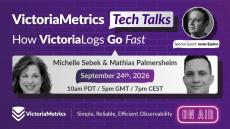
Go is fast because of decisions most engineers never see. Jesus walks through how VictoriaMetrics uses Go to process logs at scale, the tradeoffs behind those choices, and what breaks if you get them wrong. If you write Go or run log pipelines, this is 30 minutes worth blocking your calendar for. Resources for Further Learning.
|
By VictoriaMetrics
In this episode, we continue to dive into the workshop we hosted at Cloud Native Days Romania in May, together with our guest, Fred Navruzov, correlating OpenTelemetry with anomaly detection. Furthermore we explore how the VictoriaMetrics MCP server and skills bring AI-powered observability to your workflows. Learn how to detect anomalies faster and interact with your metrics, logs and traces using natural language.
|
By VictoriaMetrics
An engineer in an incident does not have a metrics problem, a logs problem and a traces problem. They have one question, and answering it today means opening three interfaces and retyping the same timestamp, service name and tenant into each one.
|
By VictoriaMetrics
The OpenTelemetry Collector presets are a great way to start collecting Kubernetes metrics.
|
By VictoriaMetrics
In this episode, we explore how to build a modern Kubernetes observability stack using open-source technologies such as VictoriaMetrics, OpenTelemetry, Grafana. Based on a step by step workshop we gave at Cloud Native Days Romania in May, Jose is walking us through it with practical examples. Playlist Resources for Further Learning.
|
By VictoriaMetrics
Warm up Community News VictoriaTraces roadmap Update VictoriaMetrics roadmap updates Community Story by Kirill Kobylianskii from Trade Republic:"Running VictoriaMetrics and Mimir Side by Side at ~100M active series" Anomaly Detection Updates VictoriaMetrics Cloud Updates VictoriaLogs roadmap Update AMA session.

|
By VictoriaMetrics
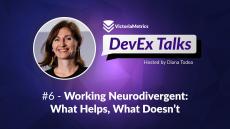
In this episode, we explore neurodiversity in tech and beyond with guests Carl Alexander and Zach Stepek. They share firsthand experiences of what has helped them thrive as neurodivergent professionals and what has not. Together, they discuss the importance of community as a key factor in empowerment, growth, and long-term success for neurodivergent individuals in both work and life. PlayList Resources for Further Learning.
- October 2026 (3)
- September 2026 (10)
- August 2026 (4)
- July 2026 (10)
- June 2026 (5)
- May 2026 (10)
- April 2026 (10)
- March 2026 (5)
- February 2026 (5)
- January 2026 (6)
- December 2025 (8)
- November 2025 (4)
- October 2025 (8)
- September 2025 (6)
- August 2025 (7)
- July 2025 (1)
- June 2025 (8)
- May 2025 (4)
- April 2025 (4)
- March 2025 (4)
- February 2025 (8)
- January 2025 (3)
- December 2024 (3)
- November 2024 (3)
- October 2024 (3)
- September 2024 (2)
- August 2024 (5)
- July 2024 (2)
- June 2024 (4)
- May 2024 (2)
- April 2024 (1)
- March 2024 (2)
- February 2024 (1)
- December 2023 (3)
- November 2023 (5)
- October 2023 (5)
- September 2023 (1)
- August 2023 (1)
- July 2023 (1)
- June 2023 (2)
- May 2023 (2)
- April 2023 (2)
- March 2023 (2)
- February 2023 (1)
- January 2023 (5)
- December 2022 (1)
- October 2022 (3)
- September 2022 (2)
- August 2022 (1)
- May 2022 (2)
- April 2022 (2)
- March 2022 (1)
- February 2022 (1)
- January 2022 (4)
- September 2021 (1)
- June 2021 (1)
- March 2021 (1)
- August 2020 (2)
- June 2019 (1)
VictoriaMetrics is a fast, cost-effective and scalable open source monitoring solution and time series database typically used for processing high volumes of data and for long term data storage. Discover our state-of-the-art, open source monitoring and observability solutions that deliver incredible performance, ease of use, scalability and (cost-)efficiency.
Our Products:
- VictoriaMetrics is a fast and scalable open source time series database and monitoring solution that lets users build a monitoring platform without scalability issues and minimal operational burden.
- VictoriaMetrics Enterprise is the fastest open-source monitoring solution and time series database supercharged with custom features, expert architectural guidance and priority support.
- Monitoring of Monitoring: For the most well-tuned system, let our MoM service do the monitoring of your monitoring and detect, mitigate and prevent potential issues before they become major problems.
- Managed VictoriaMetrics is an easy-to-configure-and-run solution that removes the extra complexity and maintenance burden typically associated with open source time series database and monitoring solutions.
We Make Monitoring Simple & Reliable For Everyone.