Operations | Monitoring | ITSM | DevOps | Cloud

Import Datadog Traces Into Honeycomb

Getting existing telemetry into Honeycomb just got easier! With the release of the Datadog APM Receiver, you can send your Datadog traces to the OpenTelemetry Collector, and from there, to any OpenTelemetry-compatible endpoint. Often, evaluating a new tracing solution requires re-instrumenting your applications from the ground up in a new vendor’s tooling. It’s a pretty high bar to clear just to see if a solution is worth adopting.


How To Build A Case For Your Cloud Cost Optimization Opportunity

Identifying great business optimization opportunities is tougher than it seems. You often need to weigh the projected revenue and costs of taking a new path against the potential opportunity costs of not taking that path. Not only is this an apples-to-oranges comparison, but also a “what if” scenario riddled with variables. For instance, what if slashing costs makes the customer experience so much slower and more frustrating that sales decline and you wind up losing revenue?

FireHydrant is now more powerful across the entire incident lifecycle

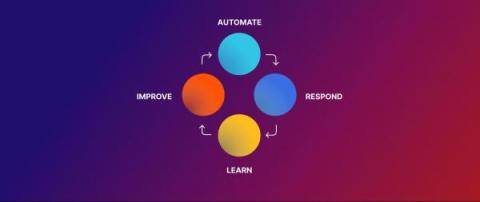
FireHydrant has partnered with incredible companies to transform incident response inside their organizations, but our goal has always been to support the full incident lifecycle. That’s because we know that investing in good incident management can kickstart your reliability efforts when it includes both a streamlined incident response process that helps you recover faster and the ability to learn from incidents and then feed those insights back into your system.

Bring Efficiency to Log Management in DigitalOcean

The ongoing partnership between Papertrail and DigitalOcean led to the development of the Papertrail software as a service (SaaS) add-on in the DigitalOcean Marketplace. With the add-on, developers can add powerful, simple, and scalable Papertrail log management to their DigitalOcean infrastructure in seconds. In two earlier posts, we reviewed how the add-on helps teams simplify and centralize log management.

3 Ways You Might Have an NOC Process Hangover

NOC, or network operation center, processes have been set in stone for decades. But it’s time for some of these processes to evolve. Digital transformation and the cloud era have led to the rise of DevOps, and with it, service ownership. Service ownership means that developers take responsibility for supporting the software they deliver at every stage of the life cycle. This brings development teams closer to their customers, the business, and the value they deliver.

We're listening! Leveling up how we gather, review, and respond to product feedback.

The Bitbucket Cloud (BCLOUD) project is an invaluable source of customer-requested product features, enhancements, and suggestions. As Bitbucket Cloud has continued to grow, we’ve built up quite a backlog! To streamline the process, we recently implemented an in-product form as a replacement for manual issue submission. Entering feedback about Bitbucket Cloud is now easier than ever!

How Cribl's Suite of Solutions Help Prevent Zombie Data

In part 1 of this series, we talked about zombie data and what it means for your observability architecture. In this post, we’ll talk more about how to handle all of it. How well can your organization handle the firehose of data it’s collecting? Yes, you have the ability to collect it, but chances are you don’t have the financial or human resources available to analyze all of it effectively.

How Businesses Are Benefiting from Hybrid Cloud Infrastructures

Side by side with the popularity of hyperscale public cloud providers such as AWS and Microsoft Azure, many organizations maintain on-premises data centers. Organizations may keep them for mission-critical legacy systems with performance demands the cloud cannot meet, or simply be in transition and have not yet migrated their infrastructure to the cloud.

10 MSP workflows to improve managed service efficiency

With customers’ Microsoft environments becoming more sophisticated, the days of MSPs being hired to ‘just’ service an organization’s Microsoft 365 needs are long gone. Pre-pandemic, tasks typically revolved around new client setups, migrations, and updating existing Microsoft setups. It’s a different story now. MSPs are focusing their time on digital transformation, which means that more processes are needed to manage tenants. So, how can processes be more efficient?