Operations | Monitoring | ITSM | DevOps | Cloud

Unified Observability: Announcing Kubernetes 360

Ask any cloud software team using Kubernetes (and most do); this powerful container orchestration technology is transformative, yet often truly challenging. There’s no question that Kubernetes has become the de-facto infrastructure for nearly any organization these days seeking to achieve business agility, developer autonomy and an internal structure that supports both the scale and simplicity required to maintain a full CI/CD and DevOps approach.

Scanning Secrets in Environment Variables with Kubewarden

We are thrilled to announce you can now scan your environment variables for secrets with the new env-variable-secrets-scanner-policy in Kubewarden! This policy rejects a Pod or workload resources such as Deployments, ReplicaSets, DaemonSets , ReplicationControllers, Jobs, CronJobs etc. if a secret is found in the environment variable within a container, init container or ephemeral container. Secrets that are leaked in plain text or base64 encoded variables are detected.

Real-Time Embedded Linux Observability with Pantavisor and InfluxDB

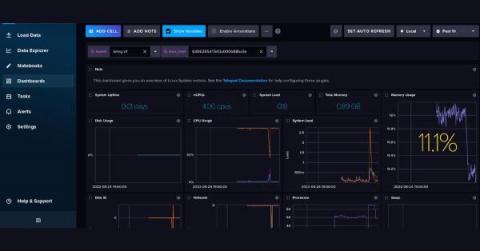
This article was originally published on HackMD and is reposted here with permission. Presently organizations are unable to monitor millions of embedded Linux devices in real-time. With so many different architectures and device types, aggregating telemetry and metrics and viewing that data in a centralized analysis tool is problematic. Onboarding embedded Linux devices into a telemetry service so that metrics can be easily observed is a significant challenge.

Reimagining the Modern Workplace Post-Pandemic

You’re probably bored with talking about Covid – we certainly are. But something that we still find interesting is that in the modern workplace, how people now interact with one another, how they work together and the communication tools that they use play a critical role in boosting their overall productivity. Because of the pandemic, many of us now split our time working between the home and the office – so how can we reimagine the modern workplace to get the most out of it?

7 ways teams are using incident.io's Decision Flows

One of my favourite features in incident.io is Decision Flows. With it, you can create a series of questions which eventually lead to a decision based on what you’ve answered. You can pull up this flow during an incident and it’ll guide you through the questions. It’s like having an experienced on-caller calmly guide you through what to do when a crisis hits. This is complementary to incident.io’s Workflows feature.

Komodor Introduces New Companion Tool For Helm

Today, I am happy to see the public release of Helm-Dashboard, Komodor’s second open-source project, after ValidKube, and my first since joining the team as Head of Open Source. It’s a compelling challenge to try and solve the pain points of Helm users, but more than anything it’s a labor of love. So it is with love that we’re now sharing this project with the community, and I’m excited to imagine where it will go from here.

Grafana and Cilium: Deep eBPF-powered observability for Kubernetes and cloud native infrastructure

Today, Grafana Labs announced a strategic partnership with Isovalent, the creators of Cilium, to make it easy for platform and application teams to gain deep insights into the connectivity, security, and performance of the applications running on Kubernetes by leveraging the Grafana open source observability stack.

Getting started with Civo Academy

Here at Civo, we have created over 50 free video guides and tutorials to help you navigate Kubernetes: from understanding the basic need for and function of containers, to launching and scaling your first clusters. You can start learning everything you need to know to get started with Kubernetes today with our nine modules which were created by in-house experts at Civo!

Puppet supports DoD continuous compliance and configuration management

Puppet Enterprise now offers Compliance Enforcement Modules aligned to DISA STIGs Benchmarks. The Defense Information Systems Agency (DISA) Security Technical Implementation Guides (STIGs) were built to safeguard our most critical security systems and data against a dynamic threat environment, yet monitoring and enforcing widely deployed infrastructure at the U.S. Department of Defense (DoD) scale is a formidable task.