Operations | Monitoring | ITSM | DevOps | Cloud

Cloud Outage Preparedness: On-Call Lessons for 2026

Cloud outage preparedness stopped being a nice-to-have this month. In a span of roughly 48 hours, Microsoft Azure lost a big chunk of its West US footprint and Amazon Web Services dropped connectivity between its us-west-2 region in Oregon and the Seattle metro. The AWS event alone rippled outward and knocked DoorDash, Reddit, Hulu, Apple Pay, Snapchat, Fortnite, and the PlayStation Network offline for millions of users, according to incident trackers. Neither outage was caused by anything exotic.

GitKraken's Claude Code Plugin Is Live: No CLI Required

If you haven’t heard about our MCP server, you should really check it out. It’s probably the best way to give your agents access to the power of GitKraken’s integrations and features. Our MCP tools also help your agents understand your codebase in a way that we think lowers your token usage and improves their output.

GitKraken Code Review: A Different Way to See What a Pull Request Actually Changed

Most PR descriptions leave out the one thing a reviewer actually needs: why the change was made. And AI review bots that live natively inside GitHub tend to solve that with noise instead, dropping comments a reviewer then has to sort through to find the two that matter.

Introducing Megaport Webhooks: Your Systems Act Before Your Team Does

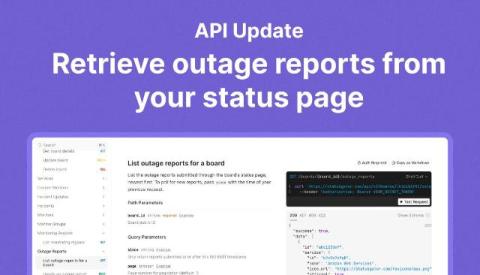
Learn how Megaport Webhooks deliver real-time events to your tools, enabling faster responses, automated workflows, and less manual work. The tools that run modern infrastructure operations, SIEM platforms, IAM solutions, and CI/CD pipelines are built to act on events as they happen. But the problem with this approach is that finding out what has changed on your account has always meant asking by either polling the API on a schedule, or waiting for an email response.

Monitoring Fundamentals in Six Lessons: From Golden Signals to Error Budgets

Summer is the perfect time to step back from the alert stream and revisit the ideas your whole monitoring practice quietly rests on. Not the newest tool or the shiniest dashboard — the fundamentals: what to measure, how to read it, when to wake someone up, and what to do when something breaks at 2 a.m. We packed six of those fundamentals into a free, no-signup PDF — The DevOps & Monitoring Summer Workbook, complete with hands-on exercises and an answer key.

Best Anomaly Detection Software: 9 Tools Compared on Cost and Coverage

Does the anomaly you need to catch show up in infrastructure, in security logs, in a data pipeline, or in a revenue figure? If you already know the answer, you probably learned it from an incident. A service degraded quietly, nobody got paged, and the post-mortem showed the signal had been in the data for hours. The thresholds were set correctly, and they still could not separate a busy Tuesday from a failure.

Triage Production Incidents with a Single Prompt Using the AppSignal CLI

At AppSignal, we love talking to our customers to learn how they're using the product. Recently, one of them showed us something worth sharing: with a single chat prompt, his AI agent searches production logs, closes incidents, and checks whether a pull request has shipped. Automating that kind of work turned out to be a matter of building the right agent skill.

CLIs are more token-efficient than MCP. Or are they?

MCP servers have a reputation: they eat your context window. CLIs paired with skills, on the other hand, are more token efficient. But is this still true? I dropped all my MCP servers five months ago. Five months is a long time in AI land. When Anthropic came up with the concept of skills, many people stopped using MCP servers in favor of CLI tooling and skills.