Operations | Monitoring | ITSM | DevOps | Cloud

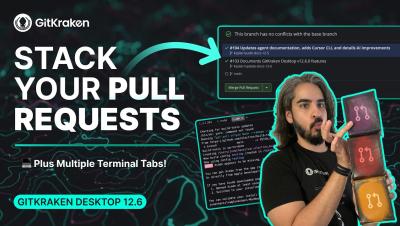
GitKraken Desktop 12.6 Release: Stacked GitHub PRs, Multiple Terminal Tabs

Ready to interact with the stack? GitKraken Desktop 12.6 makes it easier than ever to ship large features and manage multi-task terminal workflows without context switching or losing track of your work. What's new in 12.6: Stacked GitHub Pull Requests: Start a pull request stack against a branch that already has an open PR to break large feature branches into smaller pieces. Stack Visibility Everywhere: View stack position, status, and sequence numbers across the Left Panel PR list, the Pull Request view, and the Commit Graph.

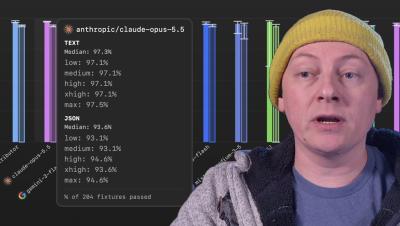
Models Are Getting Really Good At Git

I built GitBench because I was curious about how well models did git things. It turns out that it was a good idea because some models will surprise you. Some of the frontier models were remarkably bad and some cheap open models punched above their weight class. But, as they say, “the times they are a changin’”. Before I go too deep into the latest results, you may want to read up on GitBench and what it is and why I built it in the previous blog post.

GitKraken Insights | AI feels faster. Make sure it is.

AI feels faster. Make sure it is. GitKraken Insights shows engineering leaders the real cost, output, and ROI of their AI investment, per tool, per team, per developer. Then it gives every developer their own data and coaching to get more from it. 84% of developers say they feel more productive with AI. Only about one in five can actually measure the impact.* With GitKraken Insights, you can: We run on it ourselves: GitKraken's own engineering org reached 2.53x output in six months.

One Graph, Every Worktree, No Context Lost

Five worktrees for five agents sounds like organization. In practice, it’s five contexts to keep straight, five places history could live, five spots for a WIP that gets left behind or diffed against the wrong branch. GitLens 19.2’s fix isn’t a second graph. It’s making the one graph you already trust point wherever the work actually is.

Challenging the Death of the IDE

There is no doubt that LLMs have changed how we work as developers. You can go back just a year from today and I would have had a very different opinion. But, things have changed significantly. Complex work usually involves just prompting an agent for it. You still need taste and opinions to steer it the right way. With that in mind, it’s easy to se that the future of the IDE might be uncertain.

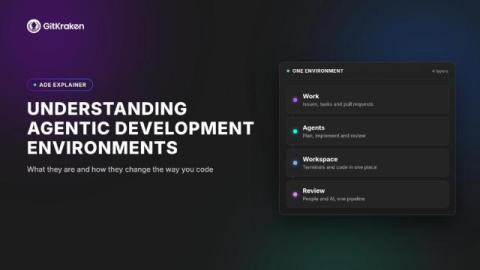
What Is an Agentic Development Environment? Kepler Is GitKraken's Answer.

Every new AI coding agent comes with the same pitch: write code faster. For most devs, that part already checks out. Codex writes a function in seconds. Claude Code refactors a file mid-meeting. Copilot fills in a test before you finish describing it. None of that touches the problem that shows up an hour later: five agents running across three repositories, each with its own diff, and no single place to see what’s stuck, what’s done, and what’s actually safe to ship.

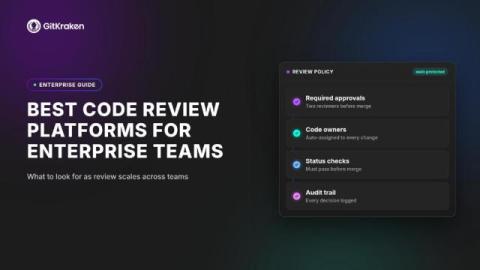
6 Best Pull Request Review Tools for Enterprise Teams in 2026

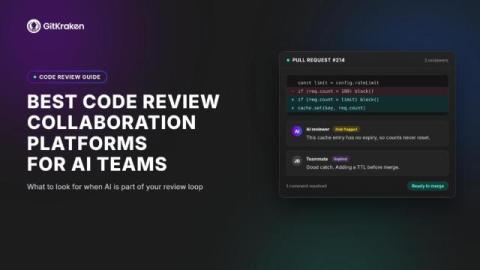
Finding the right pull request review tool can mean the difference between a team that ships confidently and one that drowns in open PRs. When review workflows are scattered across tabs, comment threads, and standalone dashboards, code quality and velocity both take a hit. GitKraken gives you a unified code review experience that connects your IDE, desktop client, and browser so reviews happen where you already work.

You Can Have Your Pi and Kepler It Too

One of the features I have been wanting in Kepler for a long time was the ability to use Pi as my agent when spinning up tasks. Pi is such a minimal harness that it doesn’t prompt for approval for every little thing and it’s system prompt let’s the model just be itself. That minimalism comes at a cost, though. Pi doesn’t have ACP support out of the box, so that means we haven’t been able to officially support it in Kepler, yet.