The latest News and Information on DevOps, CI/CD, Automation and related technologies.
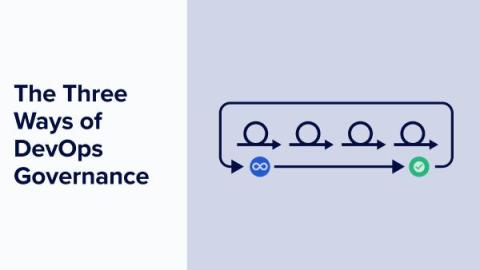
Software development, DevOps practices have become a cornerstone for organizations looking to streamline their processes and deliver high-quality software. While the agility and efficiency DevOps brings to the table are undeniable, it’s essential to remember that security should never be compromised in the pursuit of speed. In fact, it should be an integral part of the entire DevOps lifecycle.
In this year’s report, we see how organizations are using containers not just to solve their day-to-day infrastructure needs. Rather, customers are exploring the next technology frontier of containers by building next-generation applications, enhancing developer productivity, and optimizing costs.
For many developers and engineers, Kubernetes is the de facto choice for container orchestration. That’s primarily because of its efficiency in handling and scaling container workloads. However, the complexity of managing nodes in a Kubernetes cluster can cause recurring headaches for even the most experienced and skilled IT teams. This is where `kubectl cordon` comes into play.
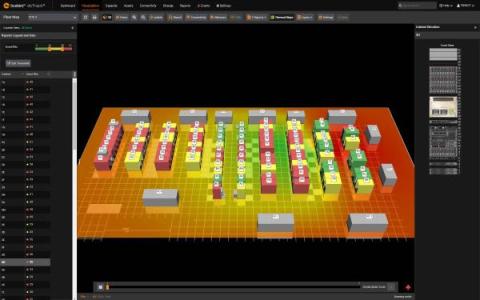
There are two main categories of PDUs: Basic PDUs and Intelligent PDUs. Basic PDUs are simple devices that provide power outlets from an input source, such as a wall socket or a UPS. They do not have any intelligence or monitoring capabilities, and they are usually mounted on racks or cabinets. Basic PDUs are suitable for low-density and low-complexity applications that do not require advanced power management features.
In today’s digital workspace, managing document versions is crucial for maintaining data integrity and fostering effective collaboration among teams. SharePoint Online, a premier collaboration platform from Microsoft, has embedded a robust versioning feature that significantly elevates document management to a new level.
Life is full of unexpected incidents. From the coffee spill that disrupts your morning routine to the sudden traffic jam that transforms a 20-minute commute into an hour-long ordeal. Much like these challenges, most of our systems and infrastructure also constantly face these tiny glitches. If ignored, they can have a significant impact. Unlike minor inconveniences, these glitches we call Incidents have the potential to disrupt your business, frustrate customers, and eat into your revenue.
Generative artificial intelligence (AI) is a form of AI that can create new, original content such as text, code, images, video, and even music. Generative AI-powered tools like GitHub’s Copilot and OpenAI’s ChatGPT have the potential to revolutionize the way you develop software, enabling you to be more efficient and creative. Used in the right way, generative AI can streamline workflows, accelerate development cycles, and unlock the potential for innovation.