For a long time at Honeycomb, we envisioned using the tracing data you send us to generate a service map. If you’re unfamiliar, a service map is a graph-like visualization of your system architecture that shows all of its components and dependencies. We didn’t want it to be a static service map, though—the kind you’d view once before going “huh, neat”—and then never looking at it again.
Will artificial intelligence (AI) end up emphasizing the importance of human emotions? What’s next for company operating budgets? And is a reckoning coming for managed service providers (MSPs)? In a recent episode of our That’s great IT podcast, we invited an expert panel to discuss all of this and more. The panel consisted of three returning guests: They shared the top IT trends they’ve seen in their industries and how they expect those trends to play out in 2023.
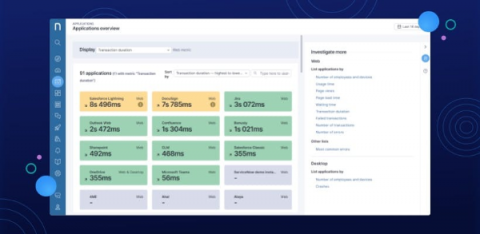
In today’s fast-paced world, app performance equals brand reputation. Customers expect apps that are fast, responsive and available 24/7. That’s where Application Performance Monitoring (APM) comes in. The technology enables businesses to ensure the best possible user experience by monitoring and managing the performance of their applications. But as applications become increasingly complex, identifying and resolving performance issues in real-time becomes increasingly difficult.
The ability to continue business operations for the foreseeable future is a key metric from a financial standpoint. But from a risk management perspective, all dimensions of an organization’s strategic and operational framework must be analyzed in order to… The last part relates to business resilience — and it’s what we’re going to explore here. (This article was written by Joseph Nduhiu. See more of Joseph’s contributions to Splunk Learn.)
In the world of enterprise major incident management, integrating partial or full automation across each stage of the incident response and management lifecycle makes a big difference to the speed incidents are addressed and the data you have to understand them afterward. Gartner coined the term “Incident Response Automation” in its 2020 report Automate Incident Response to Enhance Incident Management.
As an open-source container management system, the Kubernetes (commonly referred to as K8s) platform’s constant growth warrants an intricate cluster network, making it challenging to gain system-wide visibility. Even a tiny disruption within the network could collapse the entire operation, resulting in the failure of dependent applications. Businesses that rely on such containerized applications may experience a huge impact in revenue.