Operations | Monitoring | ITSM | DevOps | Cloud

What's New With Cribl.Cloud: Search, BYO IdP, AWS Marketplace, and More

If you have an Amazon Prime membership, you probably got it because of fast and free shipping. And then you discovered your membership also lets you watch tv, movies, and even live sports through Prime Video. When Amazon acquired Whole Foods, your membership included grocery delivery in under 2 hours! The more I explore my Prime membership, the more I find new and exciting access to services I don’t have to sign up for.

Cribl is Redefining Search for Your Observability & Security Data

Cribl, a leader in open observability, today released Cribl Search, the first federated query engine focused on observability and security data. Search flips the observability market on its head, dispatching queries to where the data is already at rest. Cribl Search was engineered to let you search data-in-place, whether the data remains at the edge, in the stream, in the observability lake, at the endpoint, or even in existing search tools.

Livin' on the Edge With Cribl Edge 4.0: Featuring Improved Scalability, Enhanced Fleet Management, and AppScope Integration

Cribl CEO Clint Sharp first announced Cribl Edge in March of 2022. Our SVP of Marketing, Abby Strong, complemented the announcement with a well-rounded blog post discussing why Cribl Edge is the first fully manageable and auto-configurable agent designed to collect telemetry data at scale. Even Aerosmith gave the product a shoutout! Well, not really, but wouldn’t it be fun if it was true? 🙂 We’re thrilled to be back with exciting news about the latest release of Cribl Edge (4.0).

Cribl's New User Interface: Simple, Accessible, and User-Friendly

The last year has been HUGE for us here at Cribl; we’ve seen explosive growth across our business. For those of us in the Product teams, one of the most exciting areas of growth has been the launch of two new ground-breaking products. First, we launched the first fully manageable and auto-configurable agent designed to collect telemetry data at scale – Cribl Edge, which enables customers to move data collection, processing, and routing out into the data source itself.

Advancing Observability: Cribl Search and New Product Enhancements Available Today

Product launch day is our favorite here at Cribl. It’s the culmination of hard work from our entire team and, better yet, the first time our customers get their hands on our latest innovations. And today is a big one. Our newest product, Cribl Search, is now generally available on Cribl.Cloud.

Azure pricing explained

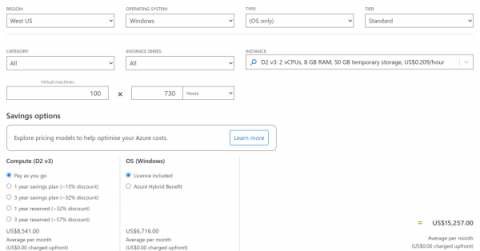
So, you’ve decided to use Azure as your primary cloud platform and want to calculate your infrastructure costs. You estimate them based on listed prices, and rest assured that your startup/project will meet its budget. And then, suddenly, at the end of the month, you receive an invoice from Azure for an amount two times higher than you originally expected.

Getting Started with Fluentd for Data Collection

Fluentd is an open source data collector capable of retrieving and receiving event data from several sources and then filtering, buffering, and routing data to different compatible destinations. It utilizes a plug-in system to help you quickly set up specific inputs, apply any required filtering, and send data to your preferred data ingestion platform. Fluentd supports multiple sources and destinations, and it can be deployed to multiple operating systems, including Windows, Linux, and macOS.

How Time Series Data Empowers Telcos to Stay Competitive

Time series databases can help telecommunications companies become more reliable, efficient and productive. The telecommunications industry is undergoing rapid change as a handful of new technologies and government actions change the underlying business landscape and create space for new companies to innovate and disrupt the established players.

TL;DR Python, Pandas Dataframes, and InfluxDB

InfluxDB has over a dozen client libraries so developers can get started more easily and program in the language they’re most comfortable with. One of our most popular options is the Python client library. InfluxDB supports not just Python but pandas, a tool popular with data scientists for analyzing and manipulating data. You can use the client library to output data from InfluxDB into a DataFrame format pandas can ingest, and you can write pandas DataFrames directly to InfluxDB.