Operations | Monitoring | ITSM | DevOps | Cloud

Using AI to Govern AI: Why Security Needs to Operate at Machine Speed

What caught my attention in the recent OpenAI and Hugging Face incident wasn’t any one exploit. It was the way the models could keep progressing across systems, combining techniques and acting with a level of speed and persistence that changes how security teams need to operate. The incident emerged during internal cybersecurity evaluations in July 2026.
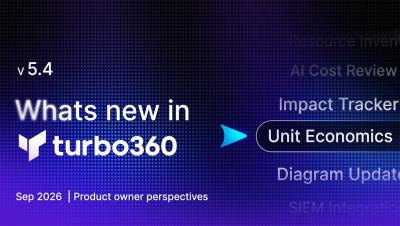
Unit Economics & AI Cost Review: What's New in Turbo360 v5.4

Move the FinOps conversation from what you spend to the value you get back. Unit Economics puts your own KPIs next to Azure cost so you can talk in margin, not just bill. New holistic trackers prove what your reservations and schedules are really saving, an AI Cost Review agent turns "how are we doing?" into a full analysis in about a minute, and rightsizing now reaches your Log Analytics workspaces.

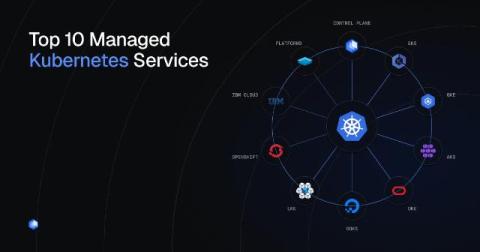
Top 10 Managed Kubernetes Services

Kubernetes has become a standard foundation for modern containerized applications, but operating clusters still requires significant engineering work. In the CNCF’s 2025 annual cloud native survey, published in January 2026, 82% of container users reported running Kubernetes in production. As adoption matures, the question for many teams is no longer whether to use Kubernetes, but how much of the operational burden they want to own.

How are folks managing CVEs at scale? #itsecurity #opensource #vulnerability #sbom

Dog-walk thoughts on vulnerabilities at scale More CVEs are being found, disclosed and weaponised faster than ever. For a small team with one product, that's manageable: a CVE lands, you fix it. But if you're running thousands of applications across tens of thousands of repos, "the teams will handle it" stops working. It becomes a governance problem.

What is a software factory?

A software factory is a system for turning engineering intent into production software through repeatable, increasingly automated workflows. It connects the tools, infrastructure, people, agents, validation, and delivery controls required to move work from an idea or issue into production. Coding agents have made the model newly relevant. Teams can now produce software changes much faster than traditional development processes were designed to evaluate and coordinate.

Token-based pricing: how AI usage billing works (2026)

Token-based pricing charges for AI by the volume of text a model processes, metered separately for input tokens (what you send) and output tokens (what the model returns). As of 2026, OpenAI, Anthropic, and Google all bill their APIs this way, and the model is spreading into enterprise chat products. Bills scale with usage rather than seats.

ElevenLabs pricing in 2026: plans, credits, and agent costs

ElevenLabs pricing runs from a free plan to $990 per month across six published tiers, with custom Enterprise above that. Plans meter usage in credits, where one credit roughly equals one character of speech. Voice agents cost $0.08 per minute on every tier, plus separate LLM and telephony charges. The AI agency PxlPeak published its own ElevenLabs invoice: $303 for January 2026, covering voice content for six clients, IVR systems for two, and live voice agents for three.

Kling AI pricing in 2026: plans, credit costs, API packages, and the spend no invoice shows

Kling AI pricing runs from a free tier of 66 daily credits to a reported $180 per month, with annual billing about 34% cheaper. Kling 3.0 bills per second: 6 to 12 credits for standard resolutions and 30 for native 4K. The API sells separate prepaid packages from $9.80 to $7,560.