
Operations | Monitoring | ITSM | DevOps | Cloud

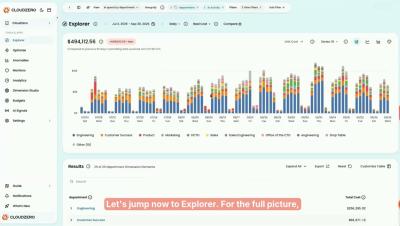
Shipped: Fit more of your cost data on one screen

Most cost questions get answered the same way. You read a chart and the table under it together. Maybe you spot a jump on the chart, and then you go looking in the table for the service, account, or team that caused it. When you can see more of that table while the chart is still in view, the whole review goes faster. You’re also a lot less likely to lose your place halfway through.
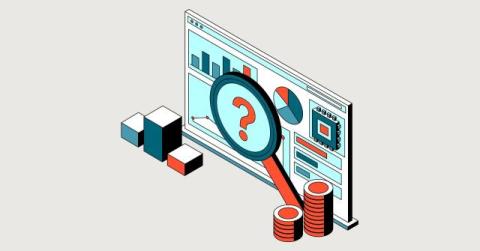
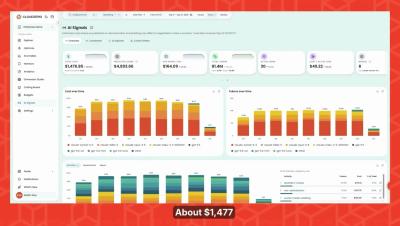
Can you see what your sales org did with $206,000 of AI last month?

Activity categorization classifies every AI request by the work it performs, such as meeting prep, code review or account research, then assigns that spend to the team, person, model and provider behind it. It turns a provider invoice that shows only totals by model and API key into a breakdown finance can allocate, charge back and budget from. CloudZero AI Signals does this as the spend happens.

Amazon told its engineers to stop chasing tokens

Amazon told its own engineers this week to stop tokenmaxxing. The memo circulated internally in September and Amazon published it on Tuesday, Oct. 27. Tokenmaxxing is the practice of using AI as heavily as possible with little regard for whether the output justifies the spend. The memo calls token usage, adoption rates, and code-change counts “deeply flawed” ways to measure a team.

CloudZero in 3 Minutes: See What Your AI and Cloud Spend Actually Buys

Cloud and AI spend in one place, tied to the teams, products, and customers behind it. Your bill tells you what you spent. CloudZero tells you why, and whether it paid off. This quick tour shows how CloudZero pulls cost from AWS, Azure, GCP, Kubernetes, Snowflake, OpenAI, Anthropic, and more, then allocates it to what your business actually cares about. No perfect tagging required.

AI Signals Demo: See Exactly What Your AI Spend Is Buying | CloudZero

See who’s spending on AI, on which models, for what work, and what you got for it. Most companies can tell you what they spent on AI last month. Very few can tell you what it bought. In this demo, we show how AI Signals captures AI usage as it happens and ties every dollar to the person, team, and work behind it, across every model and provider.

Shipped: Log and track Insights from your AI assistant

Insights are how your team tracks interesting observations, analysis and optimization work in CloudZero. Each one records the opportunity and its status, so the work gets sized, assigned, and closed out. Teams now do a lot of this work in an AI assistant. For example, you can ask Claude which instances sat idle last month, and it will tell you. But if you have to switch to CloudZero and fill out a form to log that finding, some findings won’t get logged.

AI cost per customer: measure it and protect your margins

AI cost per customer is each customer's attributed share of your AI spend: API tokens, inference infrastructure, and per-seat AI tools, measured against that customer's revenue. It matters because AI usage is wildly uneven across customers, so healthy blended margins can hide individual customers you serve at a loss. It's cost to serve, not acquisition cost. Cost per customer is the metric CloudZero was built around.

AI cost per query: how to calculate and optimize it

AI cost per query is your total AI serving spend divided by the number of queries served over the same period. It combines model API charges (input and output tokens), retrieval and orchestration overhead, and shared infrastructure. Most production text queries cost between $0.0005 and $0.02. It's the base unit of AI unit economics, and the number finance needs before any ROI claim holds up.

Shipped: Azure cost totals that match your invoice

Azure cost exports sometimes fail with a server error and then succeed on the next try. Some reports cover only part of the month. Large tenants get rate-limited when they request a lot of data at once. Each of these things can leave a gap in your Azure history. You normally find the gap when finance compares the Azure total in CloudZero to the Microsoft invoice.

Shipped: AI dimensions, organized around how your team works

AI Signals adds a standard set of AI dimensions to your dimension picker, plus custom dimensions built from your own data. Not every team needs all of them. The ones you don’t use make the ones you want harder to find. Cleaning that up used to require an engineer to run a script every time an account team needed a change. We identified the bottleneck and automated it, so account teams can manage dimensions themselves and engineering stays focused on product work.