Operations | Monitoring | ITSM | DevOps | Cloud

Five worthy reads: Privacy in pandemic management

Five worthy reads is a regular column on five noteworthy items we have discovered while researching trending and timeless topics. This week, we explore the data privacy challenges and concerns that have arisen during the COVID-19 pandemic. In the wake of COVID-19, the world has witnessed the power of technology.

Why Zero Trust in IAM is the new way forward

The increasing adoption of cloud applications and an expanding remote workforce are redefining network security. In a traditional setting, the emphasis was on perimeter-based security—assuming that everything behind the corporate firewall is safe. However, it’s clear that organizations have to rethink the philosophy of implicit trust in a corporate network.

The right way to track technician performance

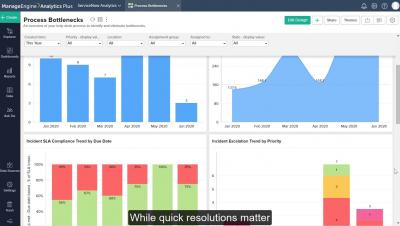
Amid concerns of resource scarcity and increasingly complex resolution processes, service desks are constantly under pressure to deliver more with less. This, in effect, forces service desk managers to drive technicians to resolve requests faster, leading to an unhealthy obsession with numbers. Several service desks are known to regard the number of requests closed by technicians as a good yardstick for their performance.

Curtail security exploits in applications and fortify your remote endpoints

The trend of working from home has hit the ground running, and businesses have turned to strategies and tools that will ensure a no-plummet productive environment. There are two major forks in the road when it comes to provisioning remote endpoints—users can use their own devices, or the company can hand over corporate-owned devices.

GCP monitoring and alerting with Applications Manager

Google Cloud Platform (GCP), a suite of cloud computing services offered by Google, launched in 2008. It is a powerful cloud platform that offers Infrastructure as a Service (IaaS), Platform as a Service, and serverless computing environments. Many companies are now using GCP to build, modernize, and scale their businesses. GCP monitoring with Applications Manager Monitoring GCP service instances can be pretty challenging.

Securing Azure Active Directory from PowerShell abuse

Malware attacks are evolving and once common tactics are becoming a thing of the past. Attack strategies, like using a third-party hacking program or injecting viruses from external sources, are almost obsolete as they leave a distinct footprint. Most antimalware tools can now detect the presence of a foreign program or device and immediately block them.

Your return-to-the-office cybersecurity checklist

The novel COVID-19 pandemic has changed the way organizations work. The sudden transition to remote work has forced organizations to look for temporary fixes to bridge the gap, leaving their endpoints exposed to an unprecedented threat landscape. Insecure internet connections, a lack of perimeter security, and the inability to implement effective security policies have made remote endpoints a breeding ground for threat actors.

Sponsored Post

11 security best practices for enterprises adopting a work-from-home model (Free e-book)

A majority of companies are moving towards a work-from-home model in an effort to reduce costs and improve operational agility. However, along with these advantages, a remote workforce brings up numerous security concerns. Download this e-book to learn how to secure your network and safely support a remote workforce.

ITIL®4 - Incident Management as a practice in building customer loyalty

Every incident is a moment of truth that will make or break the image of a service organization. The Incident management is no longer considered a mere resolution process. It should be used to create customer experience and translate it into a great value proposition. In this webinar you will learn how Incident Management practice will have a positive impact on your operations.

The essentials of monitoring AWS Elastic Load Balancing

AWS Elastic Load Balancing (ELB) dynamically distributes incoming application traffic across multiple EC2 instances and scales resources to meet traffic requirements. Elastic Load Balancing helps optimize the performance of various web and mobile applications by identifying failing EC2 instances before they affect the end-user experience.