Operations | Monitoring | ITSM | DevOps | Cloud

The latest News and Information on Application Performance Monitoring and related technologies.

Atatus APM: Full-Stack Visibility for Modern Engineering Teams 2025

APM stands for Application Performance Monitoring or Application Performance Management. It helps engineering teams track key metrics, detect slowdowns, and improve the overall performance of their applications. With Atatus APM, you get complete visibility into your application, from backend code and databases to external services and frontend performance.

Datadog vs Jaeger - Features, Pricing & Use Cases [Updated for 2025]

Datadog and Jaeger are both leading tools in the observability space, but they represent two fundamentally different philosophies. Datadog is a commercial, all-in-one SaaS platform that unifies metrics, traces, and logs. Jaeger is a popular, open-source project focused specifically on distributed tracing. Choosing between them isn't just a technical decision; it's about balancing the convenience of a fully managed, integrated platform against the power and control of a self-hosted, specialized tool.

Why APM Is Essential for Microservices Architecture?

According to Statista, over 85% of large enterprises and nearly 50% of small to midsize businesses will have adopted microservices as part of their software architecture. The shift is clear: organizations of all sizes are moving away from monolithic applications toward microservices to accelerate development cycles, improve scalability, and support continuous delivery. But this architectural freedom comes with a hidden cost, which increases operational complexity.

Beyond Metrics: How We Reimagined Incident Response with RUM

When your monitoring tools and logs tell you everything's fine, but users can't access critical healthcare services, where do you look? Our team discovered that Real User Monitoring (RUM) isn't just for tracking page load times and user journeys – it's a powerful incident response tool that can uncover issues traditional monitoring misses entirely.

How We Made Our Queries 99.5% Faster

We cut log-query scanning from ~100% of data blocks to < 1% by reorganizing how logs are stored in ClickHouse. Instead of relying on bloom-filter skip indexes, they generate a deterministic “resource fingerprint” (hash of cluster + namespace + pod, etc.) for every log source and sort the table by this fingerprint in the primary-key ORDER BY clause. This packs logs from the same pod/service contiguously, letting ClickHouse’s sparse primary-key index skip irrelevant blocks.

Here's how to add business data to logs from retail endpoints | Datadog Tips & Tricks

Some sources simply do not generate data-rich logs. Retail endpoints that are older or run on proprietary services, for example, very often produce logs without the kinds of data that are needed to perform useful business analytics. So, what can you do?

OpenTelemetry Collector: A Complete Guide [2025]

The OpenTelemetry Collector is a stand-alone service that acts as a powerful, vendor-neutral pipeline for your telemetry data. It can receive, process, and export logs, metrics, and traces, giving you full control over your observability data before it reaches a backend. This guide will provide a comprehensive overview of the OpenTelemetry Collector, its architecture, deployment patterns, and how to configure it for production use.

Comparing The Top 9 Datadog Alternatives and Competitors in 2025

The rising costs and complexities of monitoring cloud infrastructure are pushing many organizations to explore alternatives to Datadog. With monthly bills sometimes reaching thousands of dollars and feature sets that can be overwhelming, teams are looking for practical, cost-effective solutions that better fit their needs.

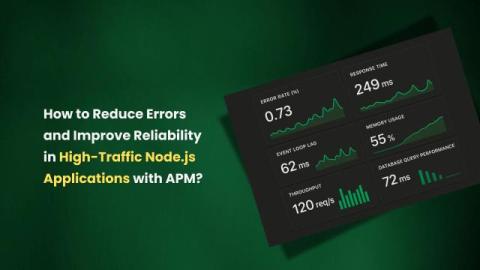
Application Performance Monitoring (APM) Use Cases Every DevOps Team Should Know

Modern applications are built using distributed architectures, microservices, and cloud-native technologies. As these systems grow in complexity, it becomes harder for DevOps teams to maintain performance, track issues, and ensure a consistent user experience across all environments. Application Performance Monitoring (APM) helps solve these challenges by providing real-time visibility into how applications behave, from user interactions to backend services and infrastructure.