Operations | Monitoring | ITSM | DevOps | Cloud

The latest News and Information on Containers, Kubernetes, Docker and related technologies.

Why DevOps Engineers Love and Recommend Qovery

My team and I built Qovery to empower DevOps engineers and Developers to better work together - without compromises. In 2022, DevOps engineers need to build reliable infrastructure on top of the best cloud service providers (e.g. AWS, Azure, GCP), dealing with security concerns, productivity, reliability, and many services. DevOps engineers are responsible for a lot of things in an organization. From CI/CD, to the run of the apps in production and the backup of databases.

Collect critical AWS metrics faster with Sysdig

Today, we are excited to announce support for Amazon CloudWatch Metric Streams. This support will enable our customers to ingest metrics from AWS CloudWatch in real time, increase metric and state fidelity and time to ingestion while decreasing MTTR, and support cloud metrics at scale without the need to customize or re-configure new AWS service metrics. In this blog, we dig deep into.

Kubernetes 101: How To Set Up "Vanilla" Kubernetes

Kubernetes is an open source platform that, through a central API server, allows controllers to watch and adjust what’s going on. The server interacts with all the nodes to do basic tasks like start containers and pass along specific configuration items such as the URI to the persistent storage that the container requires. But Kubernetes can quickly get complicated. So, let’s look at Vanilla Kubernetes — the nickname for a a K8s setup that’s as basic and elementary as it gets.

CICD Pipeline | Case Study | Razorops | 72pi

72pi is an all in one platform that enables you to compare and adjust your portfolios based on various parameters and complement your investment process and become a smarter investor at portfolio construction. With Razorops they are able to move and fix faster. Efficient feedback and a fast CI/CD pipeline allowed their team to do frequent end-to-end production deployments and get products into customers hands more quickly and efficiently.

An Introduction to Kubernetes Observability

If your organization is embracing cloud-native practices, then breaking systems into smaller components or services and moving those services to containers is an essential step in that journey. Containers allow you to take advantage of cloud-hosted distributed infrastructure, move and replicate services as required to ensure your application can meet demand, and take instances offline when they’re no longer needed to save costs.

Monitor your T2A-powered GKE workloads with Datadog

Arm processors have become increasingly popular in recent years, providing energy-efficient, cost-effective processing power to both mobile and cloud computing ecosystems. As a part of this growth, more and more organizations are choosing to leverage the many benefits of Arm-based architectures for their containerized workloads. Today, Google Cloud announced its Arm-based Tau T2A virtual machines (VMs), which you can also use to run workloads in Google Kubernetes Engine (GKE).

Migrate your PSPs to Kubewarden Policies!

As announced in past blog posts, Kubewarden has 100% coverage of the deprecated, and soon to be removed, Kubernetes PSPs. If everything goes as expected the PSPs will be removed in Kubernetes v1.25 due for release on 23rd August 2022. The Kubewarden team has written a script that leverages the migration tool written by AppVia, to migrate PSP automatically. The tool is capable of reading PSPs YAML and can generate the equivalent policies in many different policy engines.

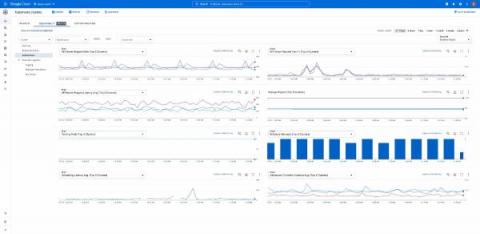
Introducing Kubernetes Monitoring in Grafana Cloud

Kubernetes has quickly become the standard container orchestration technology for developers and companies who want to deploy at scale, iterate quickly, and manage a large number of applications and services. At Grafana Labs, we recognized the need for something more powerful for our users to be able to successfully keep an eye on everything happening inside their clusters.

3 Pro Tips To Get The Most Out Of Qovery - Part 1

Some people spend hours on a spreadsheet and call themselves “Excell Ninja” here at Qovery; we spend hours on our console because, in case you don’t know yet, we test and deploy using Qovery for Qovery. After a year of using our console almost every day, I started to make a list of all the small tips and tricks that I was able to gather, and because sharing is caring, here are my top three tips to use on Qovery.

Top 15 Docker Container Monitoring tools in 2022

One of the easiest ways to see if the application running in our nodes is in an optimized state or not is by monitoring them. It is the last yet critical stage of any software development lifecycle. It opens up many possible improvements in your application, networking, IT automation, and other miscellaneous configurations. As we move towards microservice architecture, containerization and orchestration tools are rising. Containers are special processes that run in isolation from other processes.