Operations | Monitoring | ITSM | DevOps | Cloud

AI Agents Write Broken Code 49% of the Time #speedscale #AI #Coding #Tech #DevOps

AI agents write broken code nearly 50% of the time. By adding a traffic-based deterministic evaluation, Speedscale boosted unsupervised bug-fixing quality from 51% to 77% in just 5 minutes. This helped slash token costs and eliminate rework without human intervention. Learn more: speedscale.com.

Harness Agents

Today, we're launching Autonomous Worker Agents, AI agents that run as governed pipeline steps inside Harness. They inherit OPA policies, RBAC, audit trails, and scoped credentials from the first run. And because they live inside your Harness pipelines, they reason using the Harness Knowledge Graph: your services, deployments, incidents, and policies.

Reading the agent traces is how you make the call your eval can't

Remember being excited (or dreading, depending on the stage of your career and the company you worked at) about writing unit tests? Or sweating all the details in your end-to-end and integration tests you were sure covered all the use cases your users would hit? These days a lot of UIs are slowly being replaced by a single input field and an agent that promises to deliver the same value a UI would, but with the elegance and pun-ness of a “Jarvis”.

A Four-Step Blueprint for Faster Root Cause Analysis: A Logz.io Webinar

Incident investigations take so long not because the fix is hard, but because finding the right fix is. Most engineers spend 20 to 60 minutes just understanding what’s wrong before they can act, not fixing anything, just trying to see the full picture. The framework that changes this has four steps: Orient, Isolate, Hypothesize, and Verify, and the order matters more than the tools.

The most dangerous window is before threat intel knows about it

When a malicious package is first published, threat intelligence sources haven't flagged it yet – and every team pulling from a public registry is exposed during that entire window. The fix isn't faster scanning; it's a policy that holds new packages for a defined cooldown period before they're eligible to pull. By the time the window closes, the threat intelligence has caught up. Teams pulling direct from npm or PyPI have no equivalent enforcement layer – which is exactly how attacks like Shai-Hulud got in.

AI Tool Sprawl Is Killing Enterprise ROI | Why Orchestration Matters More Than AI Features

Enterprise AI adoption is accelerating, but are organizations actually solving business problems or just adding more tools? In this episode of Agents of IT, Fran Fernandez (Chief Product Officer at Resolve) and Zach Austin (Director of Product Marketing) explore one of the biggest challenges facing enterprise IT in 2026: AI tool sprawl. They discuss why many organizations struggle to demonstrate ROI from AI investments, how disconnected AI assistants create operational complexity, and why orchestration, automation, and context have become the real differentiators for enterprise AI success.

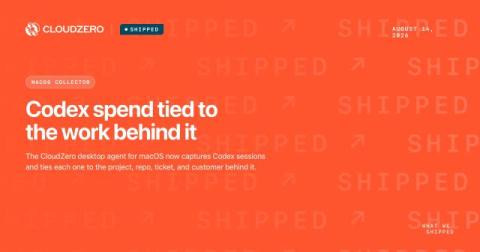
Shipped: Turn your Bifrost gateway into an AI spend meter

If you route model traffic through Bifrost, you already have the hard part: one place every AI call passes through, where the model, the tokens, and the cost are visible on the way past. It’s the cheapest spot in your stack to measure AI spend. What’s missing is everything downstream – today that usage only becomes “spend” weeks later, when the provider invoice lands as a lump sum you can’t break apart.

Don't 'control' your AI spend. Understand it and be intentional.

There’s a good interview making the rounds. BizTech sat down with IBM’s James Stevenson to talk about how financial institutions can get a handle on cloud and AI costs. The advice is solid: get visibility, kill idle resources, tighten governance, tag everything. And pull finance and engineering into the same room. I don’t disagree with it. But I read the whole piece and noticed where the gravity pulls: control costs, reduce waste, bring down spend. The headline says it (‘Q&A.