
|
By David Higgins
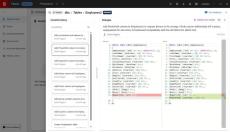
You open a stored procedure to make what should be a quick fix, and something doesn't add up. There's a filter you don't recognize, or a column that has changed type, or a join that looks like it was added in a hurry. Who changed this? When? And, most importantly, why? We're excited to announce that object level history is now available for Redgate Flyway Enterprise users of Flyway Desktop.
|
By Carly Meichen
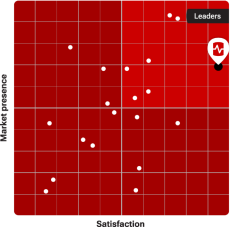
G2's Fall 2026 Grid Report for Database Monitoring is out, and Redgate Monitor is named a Leader. G2 builds its reports from verified user reviews rather than paid placement, so this recognition comes from the people who use Redgate Monitor every day, and took time out of their lives to tell others what it's like. So, a big thank you to our customers, we're grateful for every review.
|
By Laurence Allen
Assessing the cost of a database monitoring tool isn't always straightforward. The quick reaction is to solely assess costs on a license-for-license basis.
|
By Stephanie Herr
Snowflake has become a core part of how many teams store, model, and analyze their data. As more of the business comes to depend on Snowflake, the schema needs the same governance and control as any other production system. Too often, schema change in Snowflake happens through ad hoc scripts, tribal knowledge, or direct access in Snowsight.
|
By Buster.Major
"Why do I need to give Flyway this extra database?" That's one of the most common blockers we hear from users setting up a Flyway project. Flyway has long had a concept of a build database or shadow database that is a dedicated sandbox database for Flyway to do background work in. It's required for Flyway to be able to simulate what running a set of migrations will do to a database.

|
By Stephanie Herr
How much of your database delivery can you actually see? For most teams, the picture is scattered. Deployment status lives in CI logs and scripts. Drift appears outside the process. And with AI multiplying the volume and speed of changes moving through pipelines, the risk that comes with low visibility rises with every release.
|
By Adam Britt
Redgate Monitor now closes that gap. You can monitor reader nodes for the first time, alongside the writer node support we already had, and get a cluster-wide view that ties node-level health back to overall cluster performance.
|
By Norma Salcido
Every organization knows what their database monitoring tool costs on the invoice. Almost none of them have added up what it costs in the people running it, the incidents it doesn't catch fast enough, and the savings sitting in the environment that nobody has visibility to find.
|
By Fiona Black
The Digital Operational Resilience Act (DORA) has applied to financial organizations across the EU since January 2025 and is designed to strengthen their ability to withstand operational disruption. What the roundtables revealed was that although these financial organizations had completed extensive DORA planning exercises, this groundwork was not reliably translating into auditable operational control.
|
By Ryan Gee
AI coding assistants have changed how fast application code gets written. Copilot, Cursor, Claude Code, and agentic tools built on top of them can generate a working feature in minutes. But none of them know your database's history. They don't know that a migration already renamed that column last sprint, that a policy forbids unqualified DELETE statements, or that the target environment has drifted from what your migrations say it should look like.
|
By Redgate Software
This webinar covers what's new and coming in Redgate Monitor: AI with Redgate Assistant and the Redgate Monitor MCP server, CIS benchmark compliance checks and security alerting (Enterprise), AWS cloud migration advice for SQL Server workloads, and the roadmap into 2027. Redgate Monitor has shipped a lot this year, and there's more landing before the end of it. This session walks through what's new, what's coming over the next few months and into 2027, and what it all means for how you run your estate. Roadmap items are current direction, not commitments.
|
By Redgate Software
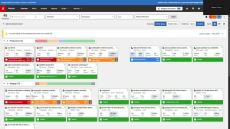
Redgate Monitor is a multi-platform database monitoring tool, not a SQL Server only tool. It monitors SQL Server, PostgreSQL, Oracle, MySQL and MongoDB from a single dashboard, on premises or in the cloud. This demo shows SQL Server, PostgreSQL and Oracle instances in the Redgate Monitor live demo environment.

|
By Redgate Software
Engineering teams' time and money are often drained by mismatched tooling and poor habits, among other things. The Redgate Advocates share their own stories of this in reality - from a mysterious 47-second retry, to the one 'rogue' engineer who derails a team. They also discuss how to get everyone pulling in the same direction without forcing everything to be identical, and whether AI helps or hurts.

|
By Redgate Software
AI budgets are escalating rapidly, yet few teams measure the value of their spend – and who ends up paying, anyway? The Redgate Advocates discuss that, LLMs, data centers, regulation, what happens to the next generation of engineers if they never learn to solve problems the hard way – and more.
|
By Redgate Software
You wouldn’t ship untested SQL Server database changes – Why is Databricks different? Databricks is where the data estate is growing, and increasingly where AI workloads run and generate change. But schema change there still happens the hard way: views and stored procedures managed through manually versioned scripts, drift between workspaces discovered when a deployment fails, and no reliable record of what changed, when, where, or why. As AI raises the volume and speed of schema change, these gaps widen.

|
By Redgate Software
Redgate Monitor is a database performance and security monitoring tool covering SQL Server, PostgreSQL, MySQL, Oracle, and cloud platforms including AWS, Azure, and Google Cloud SQL. This session walks through Redgate Monitor's latest releases and roadmap: cloud cost tracking, Google Cloud SQL support, expanded Postgres diagnostics, permission-change security alerting, CIS benchmark compliance, and a new MCP server and chat assistant for AI-powered workflows.

|
By Redgate Software
Heidi Hasting joins host Kellyn Gorman for a chat featuring Microsoft Fabric, real-time intelligence, and a permissions trap that hands your data to a coworker's chatbot...Also: what MVP status really means, and where you should visit in South Australia (snakes included)!
|
By Redgate Software
In this webinar, Redgate solution engineer Laura Copeland talks with Chris Yates, SVP of Data and Architecture at a large financial institution, about what separates a good database monitoring vendor from a bad one. His experience with Redgate Monitor runs through the whole conversation.

|
By Redgate Software
Pat Wright sits down with PostgreSQL veteran Hari Kiran – founder of OpenSource DB and co-organizer of PG Day Hyderabad, where this episode was recorded. They talk community building, mentoring the next generation of PostgreSQL contributors, and how a coffee chat with a friend turned into one of India’s biggest PostgreSQL events.
|
By Redgate Software
This session walks SQL Server developers through a complete database development workflow, from designing schema changes to testing and deploying them safely, using SQL Toolbelt Essentials. Most database teams don't struggle with SQL itself. The friction comes from process: schema changes made without a clear picture of what's already there, inconsistent code quality across a team, databases left outside version control, and deployments that feel riskier than they should. This session covers all four, with a live demo in SSMS for each one.
- October 2026 (7)
- September 2026 (11)
- August 2026 (10)
- July 2026 (9)
- June 2026 (11)
- May 2026 (17)
- April 2026 (10)
- March 2026 (15)
- February 2026 (15)
- January 2026 (11)
- December 2025 (8)
- November 2025 (17)
- October 2025 (8)
- September 2025 (10)
- August 2025 (7)
- July 2025 (12)
- June 2025 (5)
- May 2025 (13)
- April 2025 (7)
- March 2025 (9)
- February 2025 (12)
- January 2025 (11)
- December 2024 (6)
- November 2024 (6)
- October 2024 (9)
- September 2024 (7)
- August 2024 (12)
- July 2024 (10)
- June 2024 (4)
- May 2024 (5)
- April 2024 (12)
- March 2024 (13)
- February 2024 (8)
- January 2024 (3)
- November 2023 (10)
- October 2023 (3)
- September 2023 (4)
- August 2023 (5)
- July 2023 (5)
- June 2023 (4)
- May 2023 (3)
- April 2023 (5)
- March 2023 (4)
- February 2023 (6)
- January 2023 (6)
- December 2022 (1)
- November 2022 (4)
- October 2022 (2)
- September 2022 (2)
- August 2022 (2)
- July 2022 (2)
- June 2022 (3)
- May 2022 (8)
- April 2022 (2)
- March 2022 (6)
- February 2022 (4)
- January 2022 (6)
- December 2021 (6)
- November 2021 (3)
- October 2021 (3)
- September 2021 (7)
- August 2021 (1)
- July 2021 (10)
- June 2021 (5)
- May 2021 (10)
- April 2021 (13)
- March 2021 (7)
- February 2021 (8)
- January 2021 (7)
- December 2020 (19)
- November 2020 (1)
Our solutions make life easier for development, operations, and IT leaders by solving the database challenges in delivering software at speed.
Solutions for every stage in your Compliant Database DevOps journey:
- Standardize team-based development: Prevent rework and conflicts, build consistency and quality into your code, and gain time for development that adds value, with standardized best practices for database development.
- Automate database deployments: Unlock agility and performance across the full software lifecycle, with database continuous integration, continuous delivery, and shift-left testing that let you rapidly respond to user requirements.
- Monitor performance and availability: Avoid performance issues, minimize downtime, and support efficient recovery with proactive visibility and insight into your database estate.
- Protect and preserve data: Decrease the risk of breaches, protect business critical data, and meet compliance requirements while supporting data demands from developers and testers.
Discover how Compliant Database DevOps empowers your team.