This article was written by a guest author. Not long ago, if we wanted to put our code into production, we needed to manually configure a server, our infrastructure, that would host our app or database. This manual process is not only time-consuming, but also prone to errors. That is why at present, developers chose to create “scripts” that are in charge of configuring the infrastructure These “scripts” are known as Infrastructure as Code (IaC).
The ultimate success of any security monitoring platform depends largely on two fundamental requirements – its ability to accurately and efficiently surface threats and its level of integration with adjacent systems. In the world of SIEM, this is perhaps more relevant than any other element of contemporary IT security infrastructure.
In this article, we will take a look at what Cisco Webex is, how it works, and why it is great for your business. Then we will explore how to monitor Cisco Webex metrics using beautiful and customizable Grafana dashboards. We’ll also look at what are the most popular data sources Grafana uses. Finally, we will figure out how MetricFire simplifies the task of monitoring metrics for us and what are its main advantages.
Of the many challenges faced by modern enterprises, managing a remote workforce is near the top of the list. Keeping distributed teams organized, engaged, and happy is crucial in today’s highly competitive and globalized business environment. Providing reliable, secure, and cost-effective software tooling is just one piece of this increasingly complex puzzle.
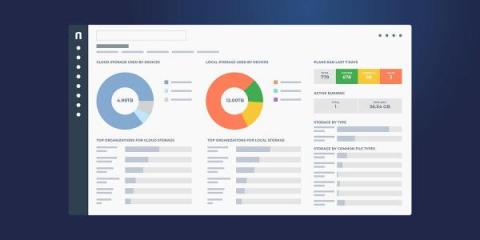
Throughout the training sessions I hosted at Empower 2021, I heard a lot of partners say things like, “I didn’t know we could do this” or “This is super useful and nice to know.” So I wanted to write a couple blogs to share some of the things partners were happy to learn about N-able™ RMM. Before I start, you can watch most of the sessions in the MSP Institute.
In today’s world of software development, one of the most emphasized practices is CI, or Continuous Integration. Continuous Integration is the first step of the CI/CD pipeline and acts as an enabler for the whole DevOps mindset and methodology. CI is the foundation of modern software development. Given the fact that this is the first stage of a proper DevOps setup, it’s crucial that it must be done correctly.