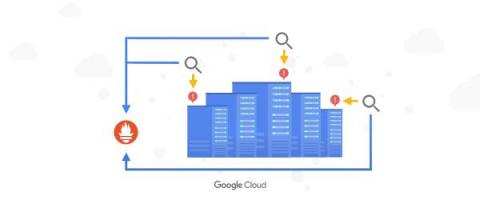
For DevOps teams, delivering quality software has long required reconciling a major tension: In a perfect world, you’d catch every issue in each new release of your application before you deployed the release into production. But in the real world, doing so is tricky, not least because it’s hard to collect data about application performance before the application is actually deployed.
In the present age of cloud-native everything, it can be easy to forget that some applications still run on-premises. But they do and managing the performance of on-premises apps is just as important as monitoring those that run in the cloud. With that reality in mind, here’s a primer on how to approach on-premises application performance monitoring as part of a broader cloud-native performance optimization strategy.
One of the first things you’ll learn when you start managing application performance in Kubernetes is that doing so is, in a word, complicated. No matter how well you’ve mastered performance monitoring for conventional applications, it’s easy to find yourself lost inside a Kubernetes cluster.
Hey Civo users, at Gimlet, we think that best practices in the Kubernetes ecosystem have solidified so much, that they can be packaged into tools, so that you don't have to make nuanced decisions every corner. This is what we have been doing with our CLI tools, and nowdays doing with the Gimlet Dashboard! We have been following Civo for over a year now and see how much the Gimlet team shares the Civo community's spirit.
Now that development teams know about CI/CD, there is no reason for deployments to become a time-consuming and cumbersome process. CI/CD may start with continuous testing, but adding automated deployments takes your CI/CD practice to the next level. Continuous deployment slashes the time it takes to release so you can spend more time improving the quality of your applications.