Operations | Monitoring | ITSM | DevOps | Cloud

The latest News and Information on APIs, Mobile, AI, Machine Learning, IoT, Open Source and more!

Creating a Custom Container for the Deep Learning Toolkit: Splunk + Rapids.ai

The Deep Learning Toolkit (DLTK) was launched at .conf19 with the intention of helping customers leverage additional Deep Learning frameworks as part of their machine learning workflows. The app ships with four separate containers: Tensorflow 2.0 - CPU, Tensorflow 2.0 GPU, Pytorch and SpaCy. All of the containers provide a base install of Jupyter Lab & Tensorboard to help customers develop and create neural nets or custom algorithms.

Using Open Source Tools to Push Metrics into LogicMonitor

Ever walk into a corner market, push on the door and find it won’t open? You look down at the handle and are reminded by a sign on the door that you have to “pull” to open it? The LogicMonitor platform uses an agentless collector to pull metrics from thousands of devices and resources into a unified monitoring view (no agents required). We currently offer more than 2,000 LogicModules out-of-the-box that gather metrics from all kinds of systems using many different protocols.

How To Prepare Your Data Center For AI

Though much of the coverage of artificial intelligence or AI has been hype, the technology itself is real enough – and gaining traction in the commercial sphere. In fact, AI is increasingly being viewed as an integral requirement for business IT setups, rather than a luxury or fad. The research firm Gartner, Inc., predicts that more than 30 percent of data centers that fail to sufficiently prepare for AI will no longer be operationally or economically viable by 2020.

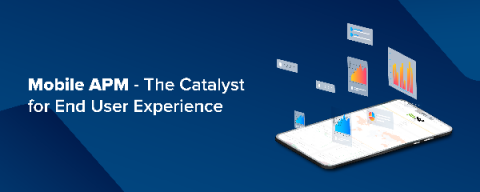
Mobile APM: The Catalyst for User Experience Management

In the era of millennials and Gen Z, there's an app for everything. In fact, Apple trademarked the sentence, "There's an app for that," nearly 10 years ago. Today, with more than 2.47 million apps available across the App Store and Google Play Store, they're not only a convenient and affordable means to access a service; they have become extensions and expressions of ourselves and our personalities.

Significance of AI & ML in Network Performance Monitoring

If you’re a tech geek you must have come across disrupting technologies like Artificial Intelligence, Machine Learning, Big Data, and IoT. These are the key buzz words since many years. With this blog we plan on kickstarting 2020 with the most sought-after question amongst IT administrators & DevOps team, “How will AI & ML benefit us?”, “What’s the role of AI in Networks?” & more. Well, let’s get started!

Kafka Data Pipelines for Machine Learning Enterprise Applications

Traditional enterprise application platforms are usually built with Java Enterprise technologies and this is the case as well for OpsRamp. However, in machine learning (ML) world, Python is the most commonly used language, with Java rarely used. To develop ML components within enterprise platforms, such as the AIOps capabilities in OpsRamp, we have to run ML components as Python microservices and they communicate with Java microservices in the platform.

Quicker Azure Monitoring, Linux Change Detection, New API Poller - SolarWinds Lab #82 (Part 2)

The first step in improving system monitoring and visibility is getting data flowing sooner rather than later. For systems engineers managing diverse resources, it can be easier said than done. In this applications- and systems-focused conclusion of our year-end performance series, Server & Application Monitor (SAM) Senior Product Manager Serena Chou joins Head Geeks Patrick Hubbard and Sascha Giese to share shortcuts to streamline Azure monitoring configuration and get the cloud performance data you need, now.

How To Cut Down Your Data Usage On Android

If you’re an Android user, relying on data from your cellular provider is one way of avoiding the risks of free public Wi-Fi – especially if you don’t have the tools or services necessary to give you full protection. Android also has a huge and widely varied user base distributed across the globe. Many of these users operate in regions where free or paid Wi-Fi isn’t even an option. In such instances, going online via cellular data is the only choice they have.