Deploy your application on AWS in 3 minutes with John Gramila
This video will show you how to quickly deploy any application in a Docker container or Buildpack with Qovery. Let us know how your deployment goes!


Two months ago, we announced our annual investment in open source maintainers, mostly folks whose work we depend on to deliver Sentry to you, plus a few research and hobby projects that our employees put on our radar. Two days ago, six of these maintainers joined us for a one-hour panel called “The Future of Open Source: Is It Sustainable?” I co-hosted with Jessica Lord, Product Manager of GitHub Sponsors.
Learn four methods to keep an eye on the status and operational condition of the Flowmon system.
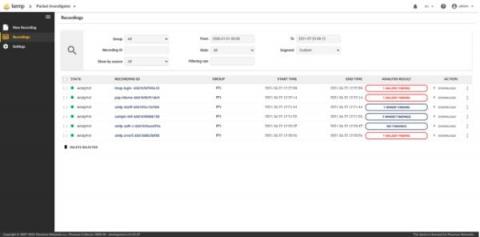
About 3 months ago, I spoke to one of our customers, an employee of an unnamed government entity, about Kemp Flowmon Packet Investigator (FPI). After giving him a short demonstration, he told me a story that happened to him just a couple of days earlier.
Implementation teams play a critical role in introducing organizations to new systems and solutions. If you’re actively taking steps to improve workflow efficiency and streamline operations, implementation teams could help you to make significant steps forward. Let’s explore how professional service organizations use implementation teams to unlock the value of workflow automation and management solutions.
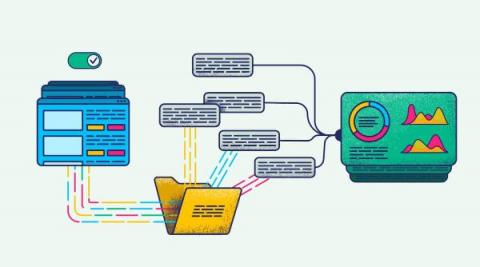
Logfile analysis plays a central role in enhancing the observability of your IT estate, helping operations teams and SRE engineers to identify issues as they emerge and track down the cause of failures quickly. As the number of log entries generated on any given day in a medium-sized business easily numbers in the thousands, viewing and analyzing logs manually to realize these benefits is not a realistic option. This is where automated real-time log analysis comes in.
Apps like VoIP, Unified Communications, and Video Conferencing can be greatly affected by network problems. To avoid performance issues, network engineers can implement QoS. Keep reading to learn about implemnting network QoS monitoring with DSCP.
Like many SaaS businesses, we have an on-call rota to enable us to provide 24x7 cover if there are problems with incident.io. We have a 'pager' which will alert the relevant person if something unexpected happens in our app, so that they can investigate and fix it if needed. Note: This was adapted from an internal document we wrote about how we think about on-call at incident.io.